
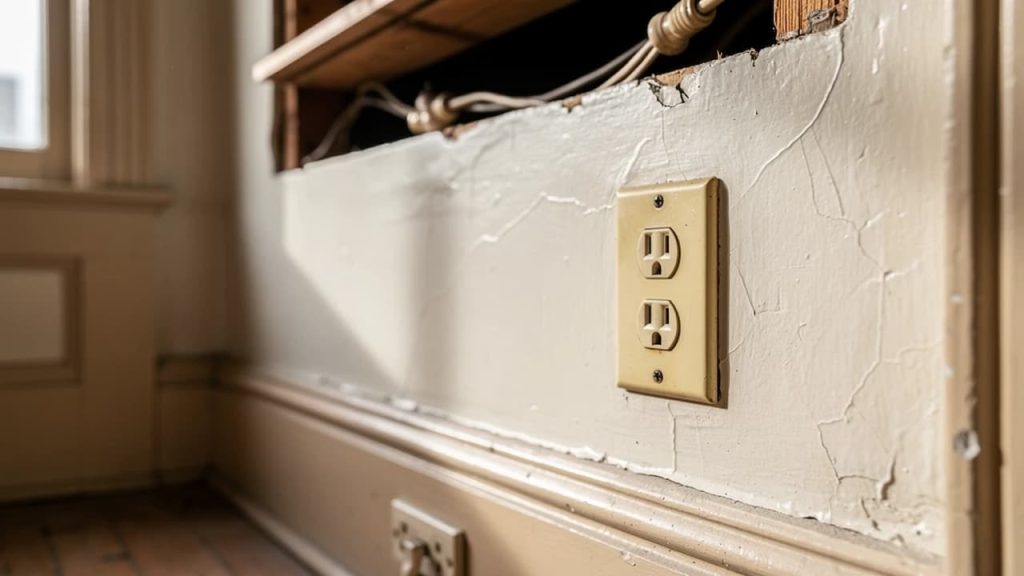
Two-prong outlets are one of the most recognizable features of older homes. If you’ve recently purchased a San Francisco Victorian, Edwardian, Craftsman, or bungalow—or you’re planning renovations in a house built before World War II—you’ve probably noticed them. They stand out immediately because they’re different from the three-prong outlets most homeowners are accustomed to today.
For many people, spotting a two-prong outlet leads to an obvious question:
Does this mean the house still has knob-and-tube wiring?
The answer isn’t always straightforward.
Sometimes two-prong outlets are connected to active knob-and-tube wiring. Sometimes they’re connected to other types of older wiring systems. In many San Francisco homes, they’re part of a much more complicated story involving decades of electrical upgrades, additions, remodeling projects, and partial rewires.
Understanding what two-prong outlets actually tell you—and what they don’t—can help you make smarter decisions about home inspections, electrical upgrades, insurance, remodeling projects, and long-term maintenance.
This guide explains the relationship between two-prong outlets and knob-and-tube wiring, how to determine what’s behind your walls, and what older San Francisco homeowners should know before assuming that every two-prong outlet automatically signals a major electrical problem.
Why Two-Prong Outlets Are So Common in Older San Francisco Homes
San Francisco has one of the oldest housing stocks in the country.
Many homes throughout neighborhoods such as Pacific Heights, Noe Valley, Bernal Heights, Inner Richmond, and the Sunset District were built decades before modern electrical standards existed.
At the time these homes were constructed:
- Electrical demand was minimal
- Grounding conductors were not standard
- Large appliances were uncommon
- Home offices didn’t exist
- Air conditioning was rare
- Electric vehicle charging wasn’t even imaginable
Electrical systems were designed primarily for:
- Lighting
- Radios
- Small appliances
- Basic household electrical use
As a result, many homes were wired using systems that lacked grounding conductors entirely.
Two-prong outlets were simply the standard outlet of the era.
For decades, homeowners thought nothing of them because there was no expectation that outlets would provide a grounding path.
Today, however, modern electrical devices are designed around grounded systems, which makes two-prong outlets feel outdated—even if they’re still functioning normally.
What Is a Two-Prong Outlet?
A two-prong outlet contains two slots:
- One hot conductor connection
- One neutral conductor connection
Unlike modern outlets, there is no grounding slot.
By comparison, a modern three-prong outlet includes:
- Hot
- Neutral
- Ground
That third grounding connection provides an important safety function.
When a fault occurs inside an appliance or electrical device, grounding provides a safe path for electricity to travel back to the system.
This helps:
- Reduce shock hazards
- Improve equipment safety
- Support surge protection devices
- Allow modern safety devices to function properly
Without grounding, electrical systems lose an important layer of protection.
However, it’s important to understand something many homeowners misunderstand:
A two-prong outlet is not automatically unsafe simply because it has two slots.
The more important question is:
What wiring system is connected to that outlet?
Does a Two-Prong Outlet Automatically Mean Knob-and-Tube Wiring?
No.
This is one of the biggest misconceptions surrounding older electrical systems.
A two-prong outlet can be connected to several different types of wiring.
Original Knob-and-Tube Wiring
This is the possibility most homeowners think about first.
Knob-and-tube wiring was widely installed from the late 1800s through the 1930s and occasionally beyond.
Because these systems were installed without grounding conductors, they typically terminate at two-prong outlets.
When a home still contains active knob-and-tube circuits, two-prong receptacles are often present.
Early Non-Metallic Cable
Many homes received electrical updates during the 1940s, 1950s, and early 1960s.
These upgrades sometimes replaced knob-and-tube wiring but still lacked grounding conductors.
As a result, the house may have newer wiring than K&T while still using two-prong outlets.
Armored Cable (BX Wiring)
Another possibility is older armored cable, commonly known as BX.
Depending on the installation and age, BX systems may:
- Provide grounding through the metal armor
- Provide limited grounding
- Provide no effective grounding at all
Many homes wired with BX originally used two-prong receptacles.
Partial Rewires
This scenario is extremely common in San Francisco.
A homeowner may have upgraded:
- The kitchen
- Bathrooms
- Laundry areas
- Exterior circuits
while leaving:
- Bedrooms
- Hallways
- Living rooms
largely untouched.
The result is a mixed system containing both modern and older wiring.
In these homes, two-prong outlets may only indicate that a particular circuit hasn’t yet been modernized.
Why Knob-and-Tube Wiring Usually Means Two-Prong Outlets
To understand the connection between K&T wiring and two-prong outlets, it helps to understand how knob-and-tube systems were originally designed.
Knob-and-tube wiring uses:
- Individual conductors
- Ceramic knobs
- Porcelain tubes
- Open-air installation methods
One thing it does not include is a grounding conductor.
Because no grounding path exists, there is no way to properly support a grounded three-prong receptacle without additional modifications.
This is why original knob-and-tube systems almost always used two-prong outlets.
When electricians encounter large numbers of original two-prong outlets in an older home, active knob-and-tube wiring becomes a possibility worth investigating.
That doesn’t mean K&T is definitely present—but it does justify a closer look.
The Evolution of Residential Wiring
One reason homeowners become confused is that outlet style alone doesn’t perfectly identify wiring type.
Electrical systems evolved gradually.
| Period | Common Wiring Type | Typical Outlet Style |
|---|---|---|
| 1880s–1930s | Knob-and-Tube | Two-Prong |
| 1930s–1950s | Early Cable Systems | Two-Prong |
| 1950s–1960s | Transition Period | Two-Prong or Three-Prong |
| 1960s–Present | Grounded Wiring Systems | Three-Prong |
This timeline explains why two-prong outlets can be associated with several generations of electrical work.
The outlet tells part of the story—but not the entire story.
How to Determine Whether Knob-and-Tube Wiring Is Still Present
The only way to know for certain is through inspection.
Fortunately, older homes often provide clues.
Check the Attic
Attics frequently contain visible wiring components.
Look for:
- White ceramic knobs mounted to framing
- Porcelain tubes passing through joists
- Individual conductors rather than bundled cable
These are classic indicators of knob-and-tube wiring.
In many San Francisco homes, attic areas still contain wiring that hasn’t been touched in decades.
Inspect the Basement or Crawlspace
Basements and crawlspaces often reveal even more information.
You may see:
- Cloth-covered conductors
- Ceramic supports
- Older splice methods
- Mixed generations of wiring
Because these spaces are usually unfinished, electrical history tends to remain visible.
Examine the Electrical Panel
A modern electrical panel does not necessarily mean modern wiring.
This surprises many homeowners.
Some homes have:
- Brand-new panels
- New breakers
- Modern labeling
while still feeding older branch circuits throughout portions of the house.
During an evaluation, electricians typically determine:
- Which circuits remain active
- Which have been replaced
- Whether any knob-and-tube wiring is still energized
Review Previous Inspection Reports
If you recently purchased the home, inspection reports often contain valuable clues.
Common inspection notes include:
- Active knob-and-tube wiring observed
- Ungrounded receptacles present
- Mixed wiring systems identified
- Further evaluation recommended
These reports rarely provide a complete electrical assessment, but they can point you in the right direction.
Why Grounding Matters More Than Ever in Modern Homes
Many homeowners discover two-prong outlets only after something else triggers the investigation.
Common examples include:
- Installing a new refrigerator
- Replacing a dishwasher
- Setting up a home office
- Purchasing a surge protector
- Installing a smart TV
- Planning an EV charger
Suddenly, outlets that seemed perfectly functional for years become a limitation.
What Grounding Actually Does
Grounding serves as a safety pathway.
If a fault develops inside an appliance, grounding helps direct unwanted electrical current safely away from people and equipment.
Without grounding:
- Fault current may not clear properly
- Shock hazards increase
- Surge protection becomes less effective
- Modern equipment loses an important layer of protection
This doesn’t mean every two-prong outlet is immediately dangerous. It simply means the electrical system lacks safety features that are standard in modern installations.
Why This Matters for Electronics
Today’s homes contain significantly more sensitive electronics than homes built during the knob-and-tube era.
Modern households rely on:
- Computers
- Network equipment
- Smart appliances
- Televisions
- Gaming systems
- Security systems
- Smart home devices
These systems often perform best when connected to properly grounded circuits.
Two-Prong Outlets and Home Inspections
Two-prong outlets tend to attract attention during real estate transactions.
Home inspectors understand that outlet style alone doesn’t identify the wiring system, but it often signals the need for further investigation.
What Inspectors Typically Note
An inspection report may include comments such as:
- Ungrounded receptacles observed
- Two-prong outlets present throughout portions of the home
- Older electrical system may require evaluation
- Evidence of mixed wiring systems
These observations don’t necessarily mean the house is unsafe.
Instead, they raise questions such as:
- Is knob-and-tube wiring still active?
- Has the system been partially upgraded?
- Are modern safety protections present?
- Can the electrical system support current household demands?
Why Buyers Become Concerned
Many buyers associate two-prong outlets with:
- Expensive electrical work
- Insurance issues
- Fire hazards
- Future renovation challenges
While some concerns are justified, it’s important to evaluate the actual wiring rather than assuming the worst based on outlet appearance alone.
Can You Replace a Two-Prong Outlet With a Three-Prong Outlet?
This is one of the most common electrical questions homeowners ask.
The answer depends entirely on what wiring exists behind the outlet.
The Common Mistake
Many homeowners assume:
“If I install a three-prong outlet, I’ll have a grounded outlet.”
Unfortunately, that’s not how electrical systems work.
The grounding protection comes from the wiring—not the receptacle itself.
Installing a three-prong outlet on an ungrounded circuit does not magically create a grounding path.
Why This Can Be Problematic
An ungrounded three-prong outlet can create a false sense of security.
Homeowners may believe:
- Electronics are protected
- Surge protectors are working correctly
- The outlet meets modern standards
In reality, the underlying circuit may still be ungrounded.
This is why electricians often test outlets rather than relying on appearance.
Why Some Three-Prong Outlets Are Still Ungrounded
One surprising discovery during electrical inspections is the number of homes that have three-prong outlets but no actual grounding.
This situation typically occurs when:
- Homeowners replaced outlets themselves
- Previous upgrades were incomplete
- Cosmetic improvements were prioritized over system modernization
The outlet looks modern.
The wiring behind it may still be decades old.
This is especially common in homes that have undergone partial renovations over many years.
Common Problems Associated With Older Two-Prong Circuits
The outlet itself is rarely the problem.
The concern usually involves the electrical system connected to it.
Limited Circuit Capacity
Homes built in the early 1900s were designed for a very different lifestyle.
A typical room may have been expected to power:
- One lamp
- One radio
- Occasionally a small appliance
Today that same room may support:
- Multiple computers
- Large televisions
- Chargers
- Printers
- Space heaters
- Air purifiers
Electrical demand has increased dramatically.
Aging Wiring Materials
Even well-installed wiring experiences aging.
Common issues include:
- Brittle insulation
- Cracked conductor coverings
- Deteriorated connections
- Aging splice points
The older the wiring, the more important professional evaluation becomes.
Lack of Modern Safety Features
Modern electrical systems benefit from protections that older systems never included.
Examples include:
GFCI Protection
Ground-fault circuit interrupters help reduce shock hazards.
They are commonly required in:
- Kitchens
- Bathrooms
- Garages
- Exterior outlets
AFCI Protection
Arc-fault circuit interrupters help detect dangerous electrical arcing.
These devices address fire risks that older systems cannot detect.
Homes with active knob-and-tube wiring generally lack these protections unless substantial upgrades have occurred.
Are Two-Prong Outlets a Fire Hazard?
The outlet itself is not usually the fire hazard.
The real question is:
What condition is the wiring in?
A properly maintained two-prong circuit may function safely.
However, concerns increase when the system also shows:
- Overloaded circuits
- Brittle insulation
- Improper splices
- Active knob-and-tube wiring buried under insulation
- Evidence of overheating
If you’re concerned about fire risk, our article on Can Knob-and-Tube Wiring Cause a Fire? Real Risks in Older San Francisco Homes provides a detailed explanation of how electrical fires develop in aging systems.
Two-Prong Outlets and Insurance Considerations
Insurance companies often pay close attention to older electrical systems.
Two-prong outlets alone typically do not determine whether a policy is approved.
However, they may trigger questions about:
- Active knob-and-tube wiring
- Previous electrical upgrades
- Grounding
- Overall system condition
Some carriers request:
- Electrical inspections
- Documentation of upgrades
- Confirmation that knob-and-tube wiring has been removed
Because requirements vary by insurer, homeowners should avoid assumptions and verify specific underwriting requirements.
What Two-Prong Outlets Mean for Renovation Projects
Many homeowners first encounter electrical limitations when planning renovations.
Kitchen Remodels
Modern kitchens require:
- Dedicated appliance circuits
- GFCI protection
- Increased electrical capacity
Older two-prong circuits often cannot support these requirements.
Bathroom Renovations
Bathrooms typically require:
- GFCI protection
- Dedicated circuits
- Updated wiring methods
Existing two-prong systems frequently need modification.
Home Office Upgrades
Remote work has dramatically increased electrical demand.
A modern office may include:
- Multiple monitors
- Networking equipment
- Battery backups
- Printers
- Charging stations
Older circuits may struggle with these loads.
EV Charger Installations
Electric vehicle charging represents one of the biggest drivers of electrical upgrades today.
Installing an EV charger often reveals:
- Limited panel capacity
- Older branch circuits
- Active knob-and-tube wiring
Many homeowners begin the charger conversation and ultimately discover they need broader electrical improvements first.
Two-Prong Outlets and Partial Rewires
One of the most common situations in San Francisco involves partial rewiring.
A homeowner may have upgraded:
- The kitchen
- Bathrooms
- Laundry room
while leaving:
- Bedrooms
- Hallways
- Living spaces
on older circuits.
The result is a home containing:
- Three-prong outlets in some rooms
- Two-prong outlets in others
- Multiple generations of wiring
This mixed condition isn’t unusual.
In fact, it’s often the norm in older housing stock.
The challenge is determining exactly what remains and whether future upgrades make sense.
Signs That Active Knob-and-Tube Wiring May Still Be Present
Two-prong outlets become a stronger indicator of active K&T when combined with other clues.
These include:
The Home Was Built Before 1940
The older the house, the greater the likelihood that some original wiring remains.
No Major Electrical Upgrade Records Exist
If there is no evidence of comprehensive rewiring, original circuits may still be active.
Ceramic Components Are Visible
Look for:
- Ceramic knobs
- Porcelain tubes
- Individual conductors
in attics, basements, and crawlspaces.
Large Areas Still Use Two-Prong Receptacles
One or two outlets may not mean much.
Entire floors or sections of the house are more significant.
Electrical Capacity Seems Limited
Frequent breaker trips, overloaded circuits, and a shortage of outlets often point toward older infrastructure.
Should You Upgrade Two-Prong Outlets?
There is no universal answer.
The decision depends on:
- Wiring condition
- Future plans
- Home age
- Electrical demand
- Budget
For some homeowners, targeted upgrades make sense.
For others, a larger modernization project may provide better long-term value.
If active knob-and-tube wiring remains throughout significant portions of the home, learning about professional replacement options through our main Knob-and-Tube Wiring Replacement service page can help you understand what a complete upgrade typically involves.
What Homeowners Should Do Next
If your home still has numerous two-prong outlets, avoid jumping to conclusions.
Instead:
Step 1: Determine What Wiring Exists
Identify whether:
- Active knob-and-tube wiring remains
- Older cable systems are present
- Previous upgrades have occurred
Step 2: Evaluate Safety and Capacity
Assess:
- Grounding
- Circuit loading
- Wiring condition
- Future electrical needs
Step 3: Plan Future Improvements Strategically
Electrical upgrades are often easier and more cost-effective when coordinated with:
- Remodeling projects
- Panel upgrades
- EV charger installations
- Major home improvements
Final Thoughts
Two-prong outlets are one of the clearest clues that a home’s electrical system has history behind it.
Sometimes that history includes active knob-and-tube wiring.
Sometimes it points to other older wiring methods.
What two-prong outlets always indicate is that the home deserves a closer look before assumptions are made.
For San Francisco homeowners, understanding the relationship between outlet style, grounding, and wiring type can prevent surprises during inspections, insurance applications, renovations, and future upgrades.
The outlet itself is rarely the whole story.
The wiring behind it is what truly matters.