

Infrastructure before devices
Smart Home-Ready Wiring Prep in San Francisco
Plan dependable power, neutrals, grounding, structured cabling, equipment locations, and spare pathways while access is available—without locking the home to one gadget brand.
The short answer
“Smart-ready” is a wiring and pathway plan, not a bag of switches
Reliable automation starts with ordinary infrastructure: suitable branch circuits, grounded equipment, neutral conductors where selected controls need them, boxes with enough space, stable network coverage, central equipment power, and routes that can be changed later.
In an older San Francisco home, those basics may be more important than the device list. Legacy switch loops, shallow boxes, metal lath, thick plaster, disconnected additions, and mixed wiring can make an otherwise simple product install unreliable or unsafe.
Four systems, one coordinated route
What a useful smart-home wiring plan covers
Line-voltage power
Dedicated or general-purpose circuits sized for the equipment, grounded boxes, compatible dimmers and switches, power for hubs and network gear, and accessible disconnects where required.
Control conductors
Neutral availability, traveler arrangements, fixture wiring, low-voltage control requirements, and box depth based on the selected control strategy.
Structured cabling
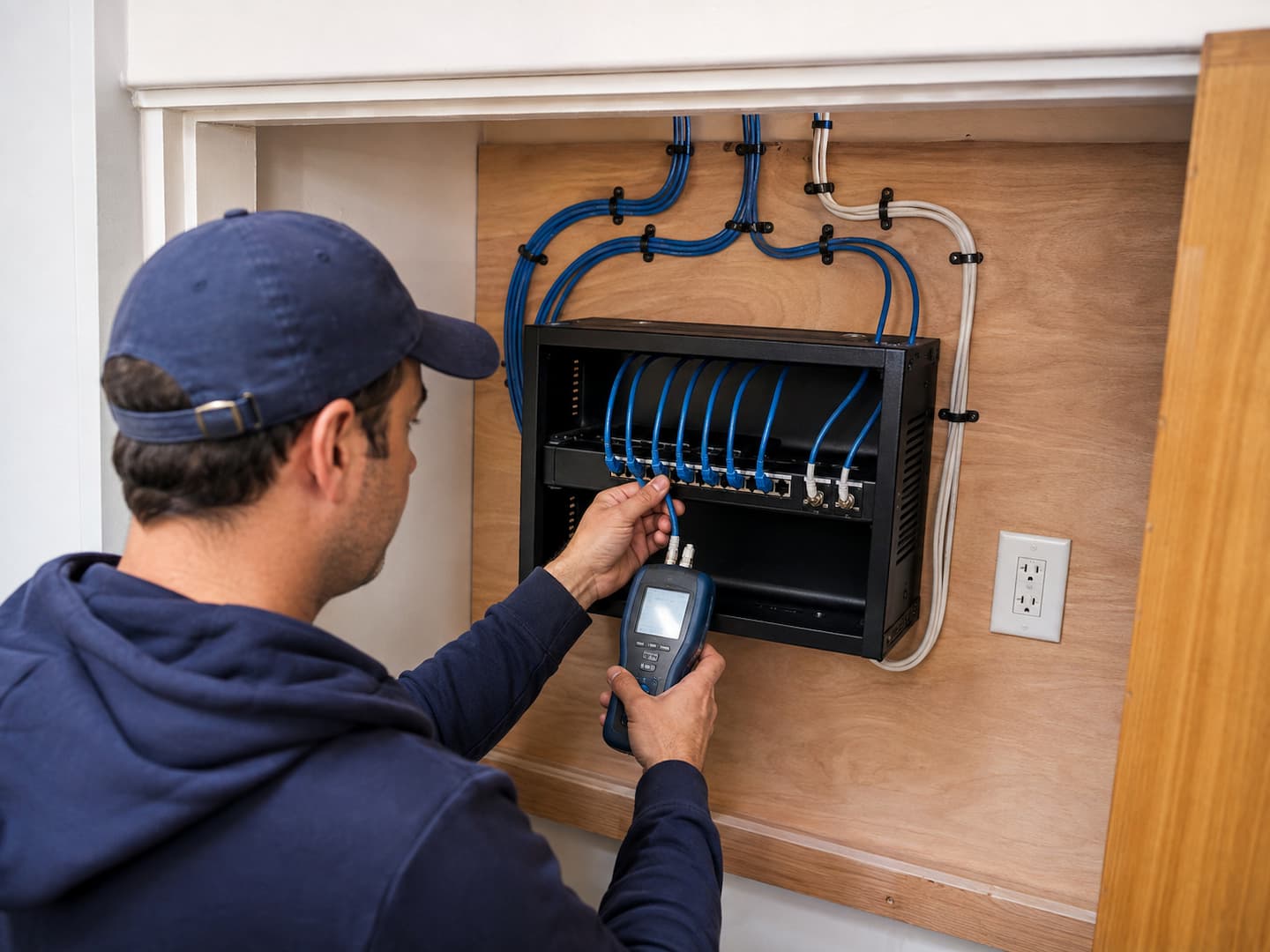
Home runs or suitable network paths to wireless access points, cameras, offices, media locations, door stations, and other devices that benefit from a wired connection.
Serviceability
Conduit or spare pathways where practical, accessible equipment locations, ventilation, clear labeling, surge protection, and a record of hidden routes.
During a remodel or rewire
Use open access for the parts that are hard to add later
Devices will change. Hidden pathways are the expensive part to revisit. When walls or ceilings are already accessible, it may make sense to add cable routes, deep boxes, neutral conductors, access-point locations, equipment power, or spare conduit.
That does not mean filling every wall with speculative cable. We document intended uses, probable equipment locations, cable type, termination points, and spare capacity so the installation has a reason to exist.
Legacy wiring compatibility
Checks before adding smart switches or controls
| Check | Why it changes the plan | Possible response |
|---|---|---|
| Neutral in the box | Many controls require a neutral, while older switch loops may not contain one. | Select a compatible control or run a suitable new cable. |
| Equipment grounding | A three-prong appearance or metal box does not prove a reliable grounding path. | Test the path and correct the circuit as required. |
| Box depth and conductor condition | Large controls create crowding and older insulation may not tolerate handling. | Replace the box or rewire the location rather than forcing the device. |
| LED and fixture compatibility | Load type and minimum load can affect dimming and switching behavior. | Match the control, driver, lamp, and wiring arrangement. |
| Network path | A powered device is not useful if coverage or backhaul is poor. | Add a wired access point, Ethernet path, or better equipment location. |
Dependencies
Put safety and capacity upstream
Smart devices do not correct undersized circuits, failed connections, ungrounded wiring, or poor panel condition. In some homes the right first project is an electrical assessment or rewire; in others, a few planned circuits and pathways are enough.
Smart-ready FAQ
Infrastructure questions
Do all smart switches need a neutral wire?
No, but many do. “No-neutral” products also have load and compatibility limits. Inspect the specific box and circuit before selecting controls.
Does structured cabling improve Wi-Fi?
Wired backhaul to well-placed access points can improve coverage and reliability. The benefit depends on layout, wall materials, service, equipment, and access-point placement.
Should low-voltage cable share holes or boxes with power wiring?
Power and communications wiring have separation, support, box, and listing requirements. They should be planned together but installed by appropriate methods rather than bundled casually.
Can you prepare an old plaster home without extensive damage?
Often much can be routed through attics, basements, closets, existing openings, and planned remodel access. The proposal should identify likely openings and restoration responsibility.
Renovating or rewiring?
Plan the pathways before selecting every device
Tell us how you want the home to work. We will translate those functions into power, grounding, control, network, and access requirements.