
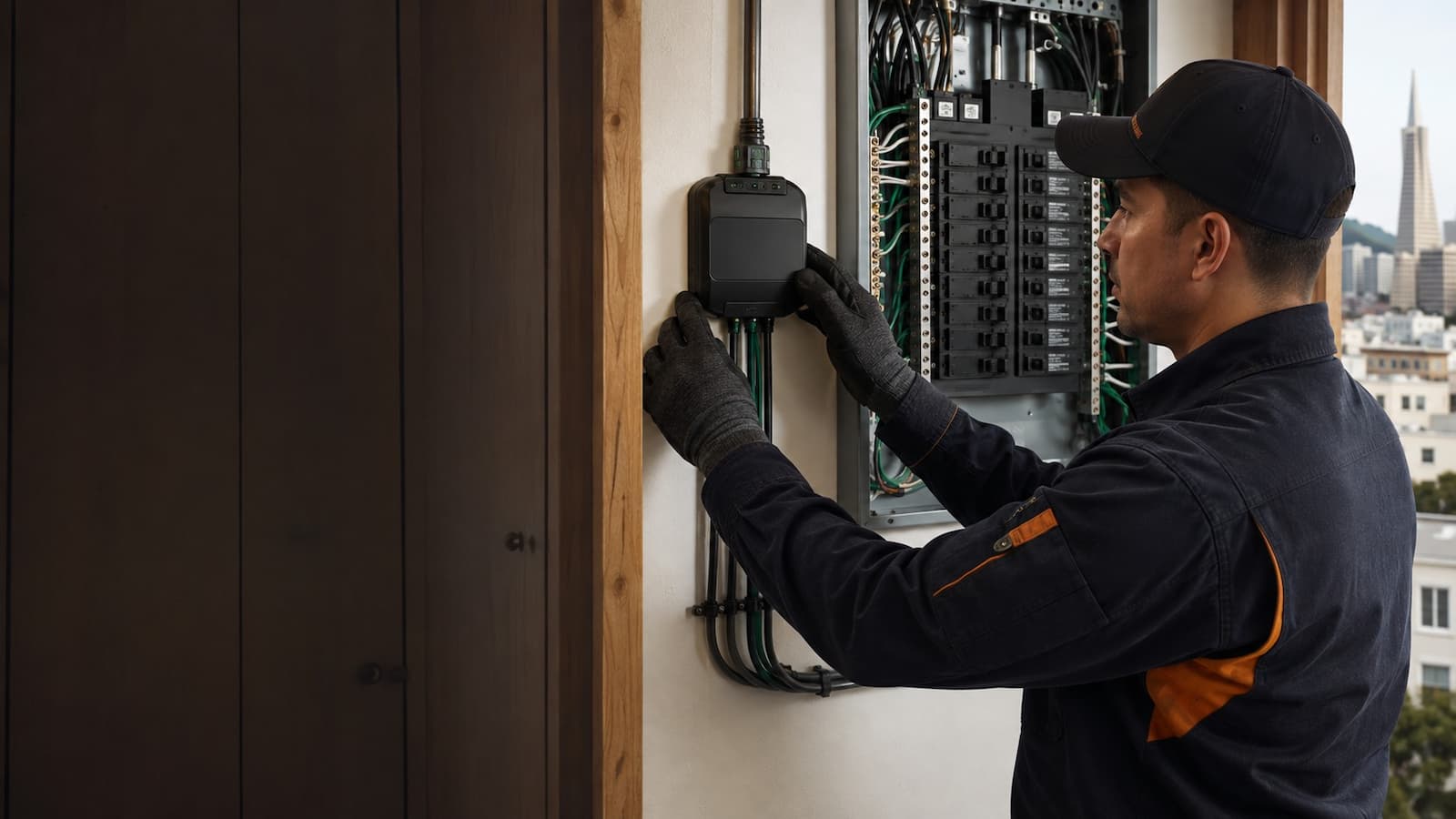
Service-level protection for connected equipment
Whole-House Surge Protection in San Francisco
Install a listed surge protective device at the service or panel, verify the grounding and bonding path it depends on, and coordinate point-of-use protection for sensitive equipment.
What it actually does
A whole-house SPD limits transient voltage; it does not make a home invulnerable
Short voltage transients can enter from the utility side or originate when motors and other loads switch inside a property. A properly selected and installed surge protective device gives that energy a controlled path and limits the voltage passed downstream.
It cannot guarantee that every event causes no damage. Protection depends on device rating, installation, conductor length, grounding and bonding, event magnitude, and additional protection at sensitive equipment or data lines.
The installation depends on the system
Five checks before selecting a device
Service and panel configuration
Determine the correct connection point, available spaces or mounting method, and equipment compatibility.
Grounding and bonding
Verify the grounding electrode and bonding context rather than assuming the device can compensate for a poor fault-current path.
Conductor routing
Keep connections arranged according to the device and panel instructions; long or improvised leads can reduce performance.
Nominal system and rating
Match the listed SPD to the electrical system and the exposure and equipment goals identified for the home.
Status and replacement
Place the indicator where it can be checked and explain what a failed status means and how replacement is handled.
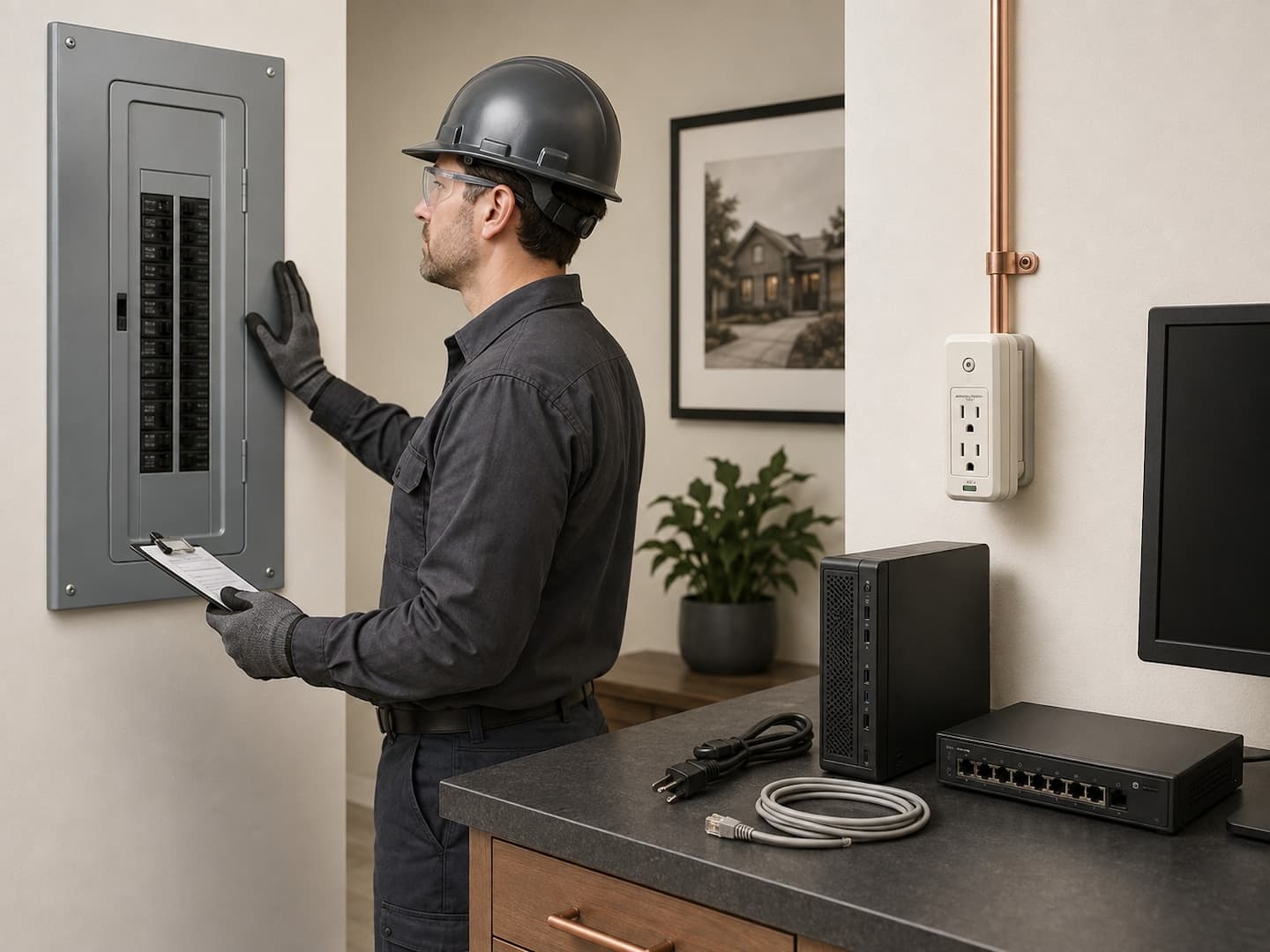
Layered protection
Power is only one path into connected equipment
Computers, televisions, routers, cameras, and other systems may connect to power, Ethernet, coaxial cable, telephone, antennas, or equipment outdoors. A service-panel SPD addresses the electrical supply; sensitive systems may also need suitable point-of-use and signal-line protection.
Plug-in strips should be listed, used within their instructions, and connected to suitable receptacles. A GFCI-protected ungrounded receptacle does not become grounded, and a glowing status light is not proof that every protective mode can function as intended.
A compact project
Assessment, installation, handoff
Review panel and grounding
Identify the service configuration, panel condition, spaces, conductor path, and grounding/bonding dependencies.
Select and install
Choose a listed device suited to the system and install it at the appropriate point using the required method.
Test and explain
Verify the installation, show the status indicator, identify protected equipment strategy, and record the device details.
Related system work
Coordinate the prerequisites
A proposal you can compare
Record the device and the installation, not just “add surge”
The estimate should identify the SPD model or performance basis, connection location, required breaker or mounting method, panel compatibility, indicator location, and any grounding or panel correction priced with it. If a manufacturer offers replaceable modules or a product warranty, keep the registration and installation record with the panel documents.
Surge protection FAQ
Questions before installation
Does a whole-house SPD replace plug-in surge protectors?
Not always. Service-level and point-of-use devices can form a layered approach. Sensitive equipment and signal/data connections may still need appropriate local protection.
Will it protect against a direct lightning strike?
No installation should be sold as a guarantee against every event. The device limits transients within its design and listing; event magnitude and the entire grounding and protection system affect the outcome.
Can an SPD be installed on an older panel?
Sometimes, but panel condition, listed compatibility, connection point, space, and grounding/bonding must be reviewed first. Replacement or correction may be the safer prerequisite.
How do I know when the device needs replacement?
Many devices provide a status indicator. Follow the manufacturer’s instructions and have the unit evaluated after a status change or known significant event.
Protecting new electrical equipment?
Review the panel and grounding before choosing the SPD
We will identify a compatible installation and explain the role of whole-house and point-of-use protection.