

Buyer and seller electrical due diligence
Real Estate Electrical Clearance for Knob-and-Tube Wiring
Turn an inspection comment into a property-specific record of what is visible, what appears active, what should be corrected, and which questions remain before contingency or closing deadlines.
A careful use of “clearance”
The document should state a finding, not imply a guarantee
“Electrical clearance” is often used informally during a transaction. It can mean an electrician’s condition report, a statement about active knob-and-tube, proof of completed repair, a final permit record, or an insurer-specific form.
Before the visit, we identify who requested the document and what decision it must support. The finished record states the scope, observations, tests, limitations, and recommendations. It does not guarantee loan approval, insurance, code acceptance outside a permit, or concealed conditions.
Two clients, different decisions
Buyer track and seller track
Understand scope before removing contingencies
Confirm the evidence behind the general inspection comment, identify likely active areas, evaluate panel and capacity context, and separate immediate safety issues from planned modernization.
- Noninvasive accessible-area inspection
- Representative circuit tracing
- Repair or replacement scenarios
- Access and restoration assumptions
- Questions to send the insurer before closing
Reduce ambiguity before listing or response
Collect relevant records, inspect accessible legacy wiring, correct agreed issues under the appropriate permit path, and assemble completion documentation that can be shared consistently.
- Pre-listing electrical review
- Priority corrections and quote
- Permit and inspection coordination
- Before-and-after photo record
- Clear statement of work completed
Transaction deliverables
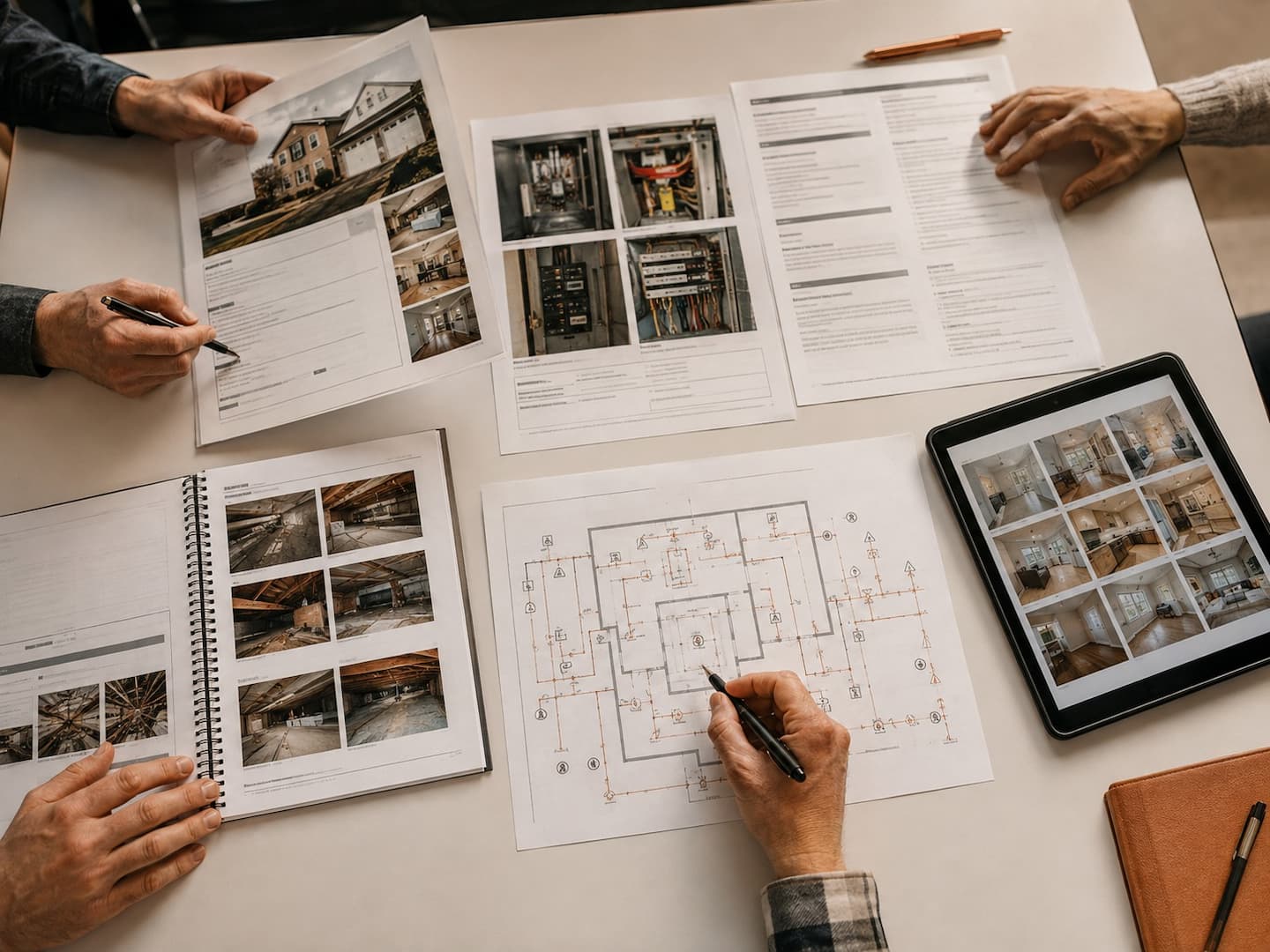
A documentation ladder
Inspection finding
What the general inspector observed and what follow-up was recommended.
Electrical assessment
Accessible evidence, representative tests, panel context, limits, and a proposed scope.
Completion record
Invoice and scope, photos, labels, tests, and material or equipment details relevant to the work.
Permit record
Required permit and inspection status for work that went through the City process.
Schedule backward from the decision
Build time between the inspection and the closing
A site visit may lead to further testing, a repair proposal, permit work, utility coordination, finish restoration, or an insurer follow-up. Leave room for decisions after the report.
When time is short, we can prioritize the question most likely to change the transaction. That may be confirming active wiring, evaluating a flagged panel, defining a replacement scope, or documenting already completed work.
For carrier-specific requests, use the insurance electrical report service.
Related next steps
Turn the transaction question into a usable scope
Start with the decision that is holding up the sale. The first three steps move from evidence to a priced plan; the two supporting reviews cover issues that often sit beside old branch wiring.
Verify what is active
Trace accessible knob-and-tube runs and document the limits of the inspection.
Inspection and tracing →02Define the replacement
Translate the findings into rooms, circuits, access assumptions, and handoff records.
Replacement planning →03Compare the price correctly
Check what each estimate includes before treating two totals as comparable.
Cost and scope guide →Transaction FAQ
Questions before contingency or closing
Can you certify that a house has no knob-and-tube wiring?
Only to the extent supported by the agreed inspection, testing, access, and records. Concealed areas may require broader tracing or targeted access. The document should state exactly what was verified.
Can a modern panel prove the home was rewired?
No. New panels often feed a mix of new and older branches. Branch-circuit inspection and records are separate from panel appearance.
Can the report be used to negotiate a credit?
The report can describe findings and a proposed correction scope. Price negotiation is a transaction decision for the parties and their advisors.
Will repairs guarantee insurance before closing?
No. Ask the insurer what method and records it will accept. We can document the inspection and completed work, but the carrier controls underwriting.
Who should order the assessment?
Either party can, subject to access and contract terms. The requester should identify the intended reader and decision so the scope serves the transaction.
Working against a transaction clock?
Send the report and deadline before the visit
We will identify the narrowest inspection or documentation scope that answers the electrical question without overstating certainty.