
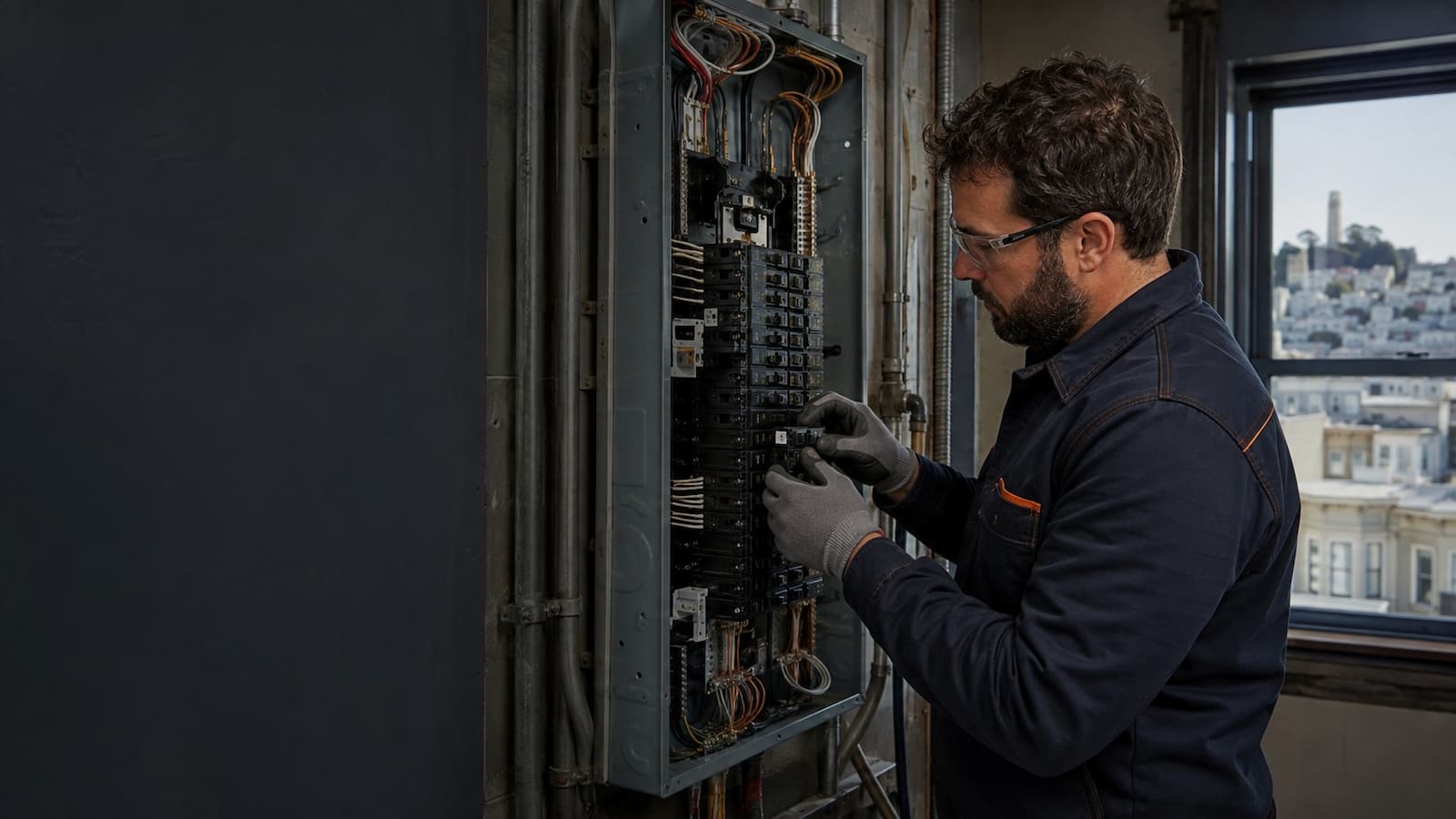
Arc-fault and ground-fault protection
AFCI & GFCI Breaker Installation in San Francisco
Choose the protection required for the circuit and project, verify panel compatibility and wiring condition, then test the finished installation instead of treating every trip as a nuisance.
Different hazards
AFCI, GFCI, and dual-function protection
Abnormal arcing
Arc-fault protection is intended to detect certain hazardous arcing conditions associated with damaged conductors, cords, or connections and disconnect the circuit.
Shock risk
Ground-fault protection monitors current imbalance and disconnects quickly when current may be taking an unintended path, especially important in specified locations.
Both protections
A dual-function device combines AFCI and GFCI protection where the circuit and installation call for both. It is not the same as a standard breaker.
Compatibility before installation
A modern breaker cannot correct every old circuit problem
Shared neutrals, crossed conductors, downstream neutral-to-ground connections, damaged insulation, loose splices, incompatible panel equipment, and some legacy circuit arrangements can prevent proper operation or reveal faults as soon as protection is added.
We identify the circuit, panel listing, conductor arrangement, grounding and bonding context, and loads before choosing a breaker or device strategy.
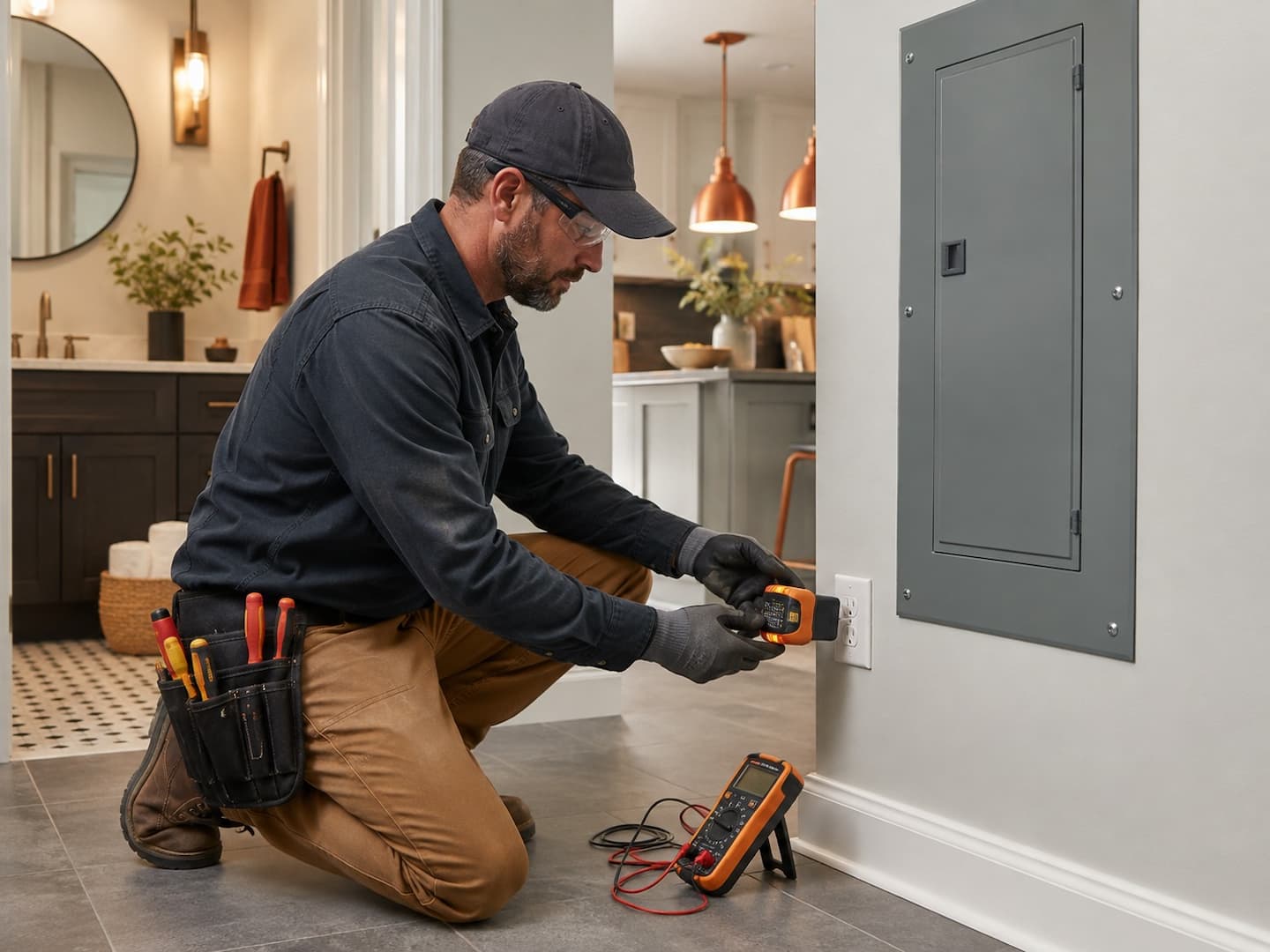
When a new breaker trips
Treat a new trip as a diagnostic clue
Repeated tripping may point to a wiring fault, shared neutral issue, moisture, damaged appliance, incompatible load, or incorrect installation. Resetting repeatedly or replacing the device with a standard breaker can remove protection without correcting the cause.
We test the protected circuit, isolate downstream loads where appropriate, and explain whether the solution is wiring correction, device correction, equipment service, or a different listed protection configuration.
Installation sequence
From circuit inventory to final test
Identify project requirements
Review the room, load, alteration scope, and current adopted requirements.
Inspect panel and circuit
Confirm listed breaker compatibility, conductor arrangement, neutral paths, and observable legacy conditions.
Correct before protecting
Resolve defects that would defeat or prevent proper operation rather than forcing the installation.
Install, test, label
Use the device test function and appropriate circuit tests, update identification, and explain owner testing.
Related foundations
Protection works inside a larger system
Before the appointment
Tell us what changed before the tripping began
A useful history can shorten diagnosis. Note which breaker or device trips, whether the event is immediate or delayed, and what appliances, lights, outdoor equipment, or renovation work were involved. A photo of the panel directory and the device model also helps us prepare.
AFCI/GFCI FAQ
Protection questions
Should I install a breaker or a receptacle?
The choice depends on required coverage, circuit access, panel compatibility, downstream configuration, reset access, and the wiring method. One is not universally “more code compliant” than the other.
Can AFCI protection be added to knob-and-tube wiring?
Compatibility and circuit condition must be evaluated. Shared neutrals, alterations, insulation damage, or other legacy conditions may cause trips or require correction. The protective device does not make deteriorated wiring new.
Why does the new device trip with an appliance?
The trip could reflect appliance leakage, damaged cords, wiring faults, moisture, load characteristics, or installation issues. Diagnosis should isolate the cause rather than automatically removing protection.
How often should AFCI and GFCI devices be tested?
Follow the manufacturer’s instructions and any applicable local guidance. We demonstrate the test function and identify the protected circuits at handoff.
Need modern circuit protection?
Inspect the circuit before changing the breaker
Our electricians review panel compatibility, wiring condition, circuit arrangement, and the applicable project requirement.
Safety and code references
The U.S. Consumer Product Safety Commission explains that AFCIs provide enhanced protection from fires associated with unsafe arcing and GFCIs protect against severe shock. Current location and installation requirements are governed by the adopted California and San Francisco electrical codes and the listed equipment instructions.