
Older-home electrical specialists · San Francisco
Knob-and-Tube Wiring Replacement in San Francisco
Find out what is still active, replace the circuits that need attention, and leave the home with grounded, documented wiring built for the way you use it now.
- Inspection-led scopes for older homes
- Permit and inspection coordination
- Careful work around plaster and original trim
A better first step
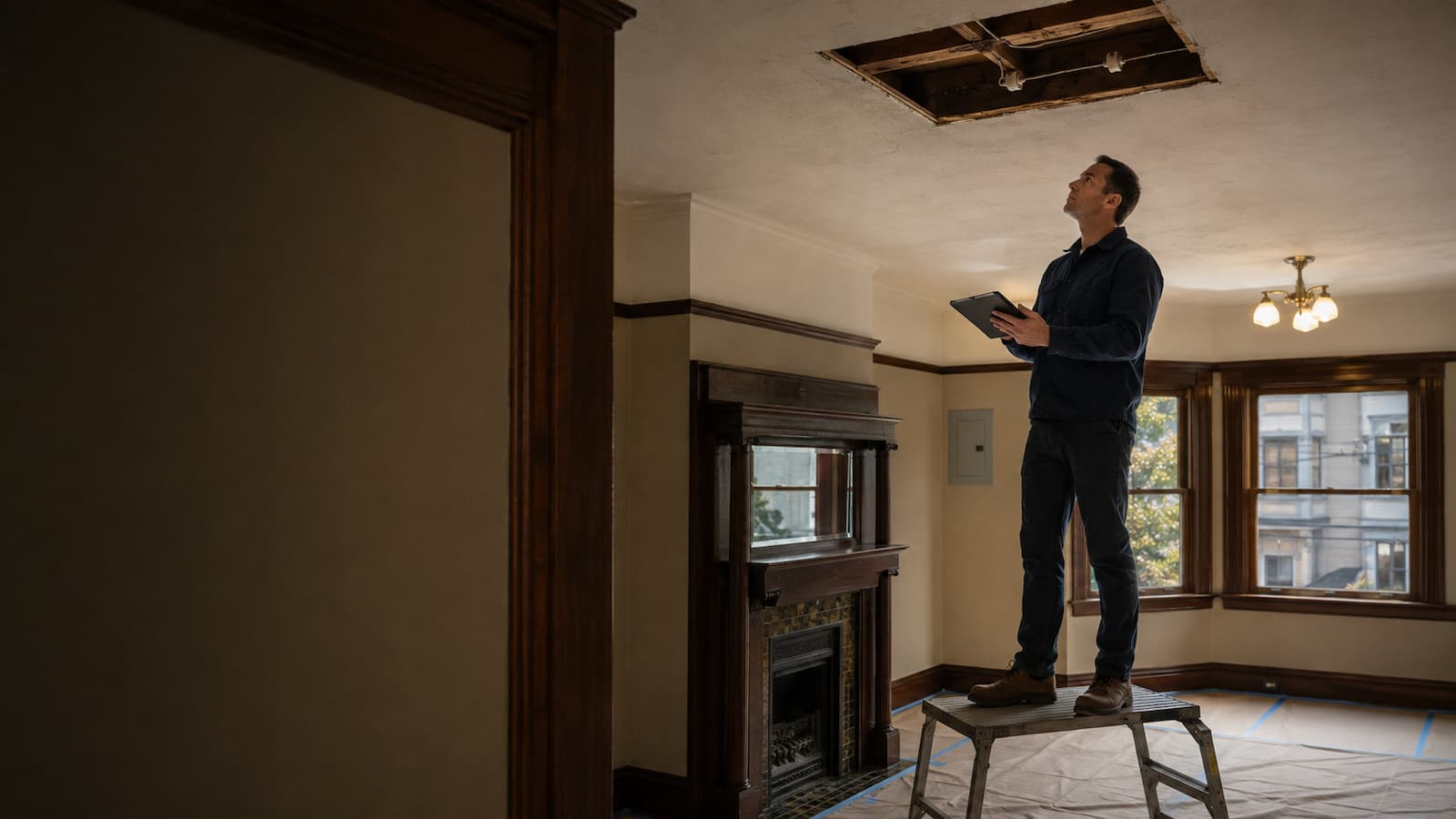
The house’s age is not an electrical scope
A 1908 flat can have original lighting circuits, a newer kitchen, and a recently replaced panel all at once. Another house of the same age may have active knob-and-tube on every floor. Those are different projects.
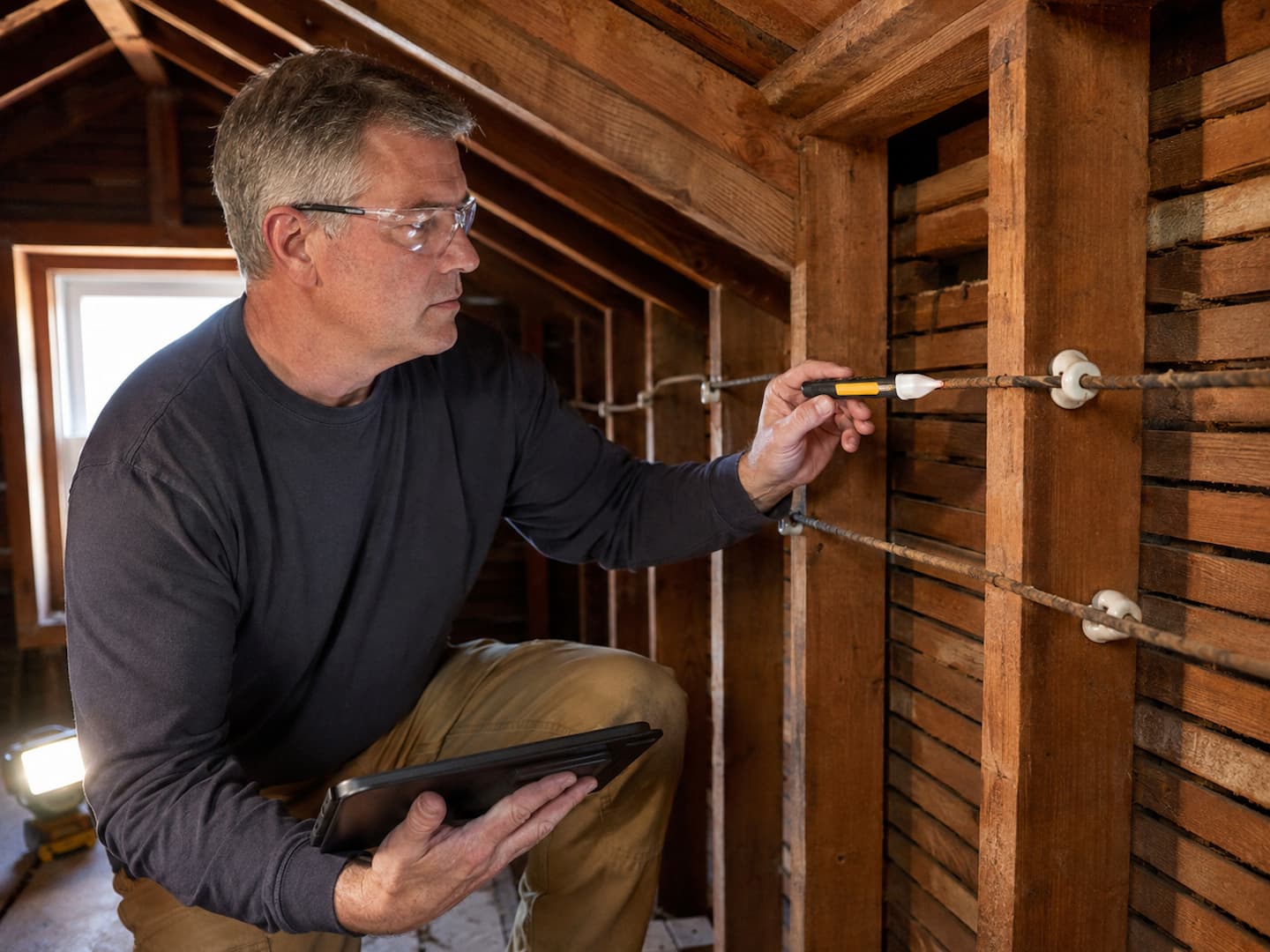
We begin by locating accessible legacy wiring, tracing representative circuits, reviewing the service and panel, and asking what prompted the call. An insurer’s deadline calls for a different sequence than a planned kitchen remodel. A warm switch or burning odor calls for immediate safety triage.
The practical answer: replacement should be based on active circuits, condition, access, present loads, and the outcome you need. The assessment turns “old wiring somewhere in the house” into a usable scope.
Choose the path that matches the problem
What brought you here?
A carrier flagged old wiring
Start with documentation, not a vague promise that the system is “fine.” We can inspect accessible conditions and prepare an insurance electrical report or a correction plan.
The transaction has a deadline
Buyers and sellers need facts that can support a decision. Our real-estate electrical review separates confirmed findings from concealed unknowns.
Walls will be open soon
Plan the electrical scope before demolition, cabinets, insulation, or finish work. Early routing and load decisions prevent avoidable openings and rushed change orders.
Something changed
Flickering, heat, odor, arcing sounds, or repeated trips deserve prompt evaluation. If there is smoke, visible arcing, or fire, leave the area and call emergency services.
You are adding major loads
A heat pump, induction range, electric dryer, or EV charger can change the service and circuit plan. A panel and load assessment belongs upstream of equipment purchases.
You only saw a few porcelain parts
Visible knobs do not prove that a circuit is active, and a modern panel does not prove old branches are gone. Book a knob-and-tube inspection before deciding.
Scope, not slogans
Full replacement, phased replacement, or a targeted correction?
Not every visible porcelain knob calls for the same response. What matters is whether legacy conductors are energized, where they run, what they serve, how they have been altered, and what the project must accomplish.
A responsible proposal should say which circuits will be replaced, what legacy material may remain disconnected in inaccessible cavities, whether the panel or service is part of the job, how wall access is handled, and which records you receive at completion.
| Approach | When it may fit | Questions to settle first |
|---|---|---|
| Targeted correction | A localized defect or improper extension is confirmed and the rest of the system is outside the immediate scope. | Will the corrected circuit remain compatible with existing wiring, devices, grounding, and protection? |
| Phased replacement | The home is occupied or budget and renovation timing favor an area-by-area plan. | Can each phase end in a safe, clearly labeled state without creating ambiguous mixed circuits? |
| Full active-system replacement | K&T remains widespread, insurance or renovation goals require removal from service, or modern loads justify a new circuit plan. | What are the access, panel, service, permit, device, testing, and finish-restoration boundaries? |
A price you can compare
Need a budget? Make sure every estimate prices the same job
The largest cost driver is not square footage by itself. It is the number and location of active circuits, how those circuits can be reached, and what the finished electrical system must support. Two homes with the same floor area can require very different work.
Our San Francisco knob-and-tube replacement cost guide breaks down the scope, access, panel, permit, occupancy, and finish-restoration variables that belong in a comparable estimate.
Items that belong in a useful estimate
- Rooms and active circuits included in the replacement
- Access assumptions for plaster, ceilings, attics, and finished lower levels
- New devices, boxes, grounding, and required circuit protection
- Panel, service, utility, permit, and inspection responsibilities
- Patching, painting, cleanup, planned outages, and occupied-home sequencing
- Testing, labeling, documentation, exclusions, and change-order rules
Built around San Francisco houses
Keep the architecture. Replace the electrical assumptions.
Old-house rewiring is a routing problem as much as an electrical one. Attics may stop short of a rear addition. Finished basements can hide the original joist bays. Stacked flats may share chases but not branch circuits. Ornamental plaster, picture rails, pocket doors, and built-ins narrow the available paths.
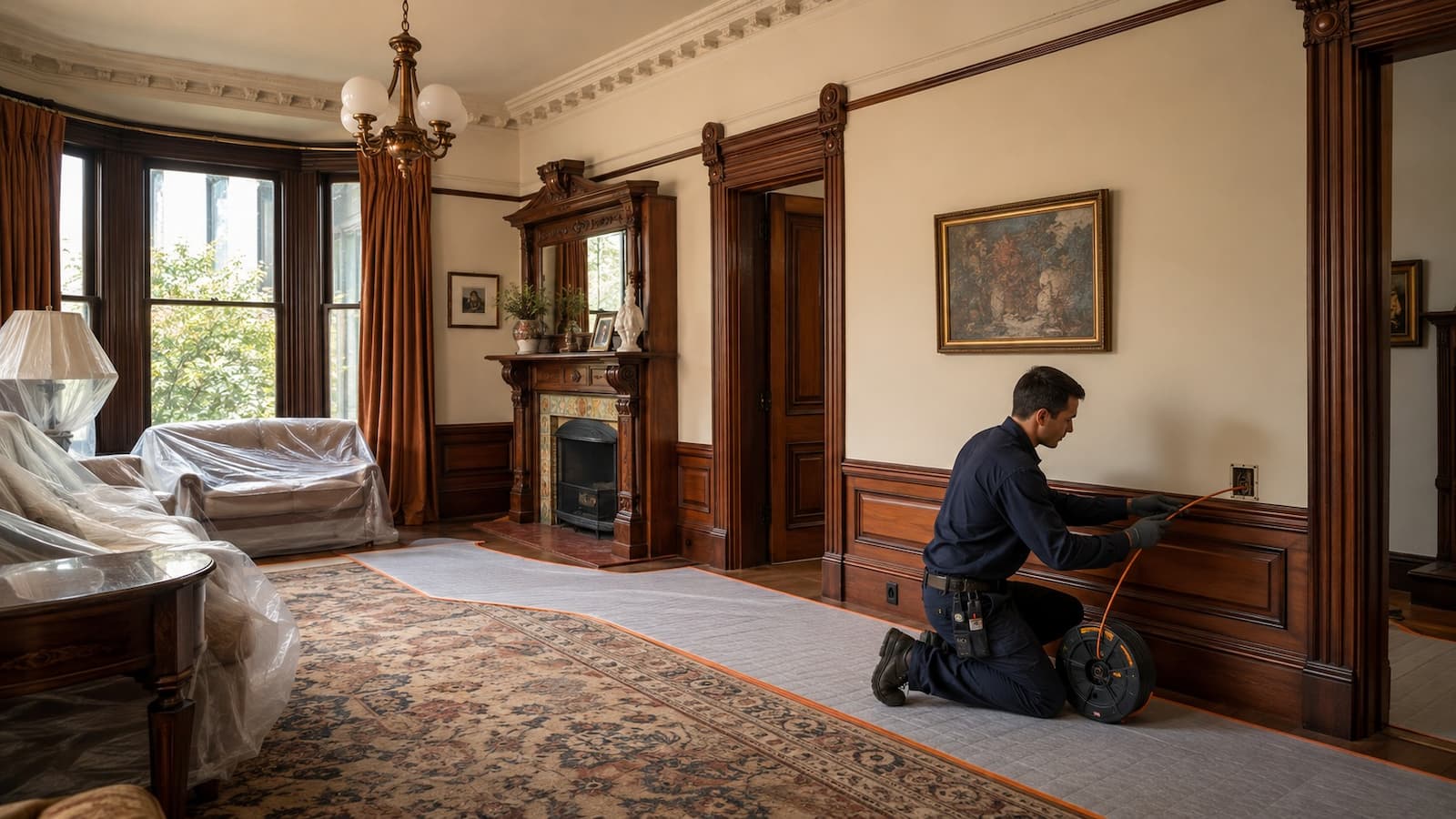
Before cutting, we look for routes through closets, unfinished utility areas, existing device openings, basement framing, and attic edges. Necessary access points are discussed in advance. Electrical work and finish repair are separate scopes unless a written proposal says otherwise.
- Floor and surface protection before tools come inside
- Small, planned access points instead of exploratory demolition
- Clear decisions about occupied rooms and daily power restoration
- Testing and labeling before openings are closed
See how this planning applies to a Pacific Heights Victorian rewire.
From first visit to handoff
A rewire should become more certain as it moves forward
Older buildings always contain unknowns. A good process does not pretend otherwise; it reduces them in the right order and records the decisions.
Assessment and circuit map
We review the reason for the project, inspect accessible wiring and equipment, test representative points, and identify where more investigation is needed.
Written scope and routing plan
The proposal defines rooms, circuits, devices, access assumptions, panel or service work, permit responsibilities, exclusions, and options.
Permit and job preparation
Required electrical permits and inspections are coordinated. Work areas, protection, sequencing, and planned outages are reviewed with the owner.
Installation in controlled phases
New grounded circuits are routed and supported, boxes and devices are corrected as scoped, and old conductors are taken out of service without creating mystery connections.
Testing, inspection, and records
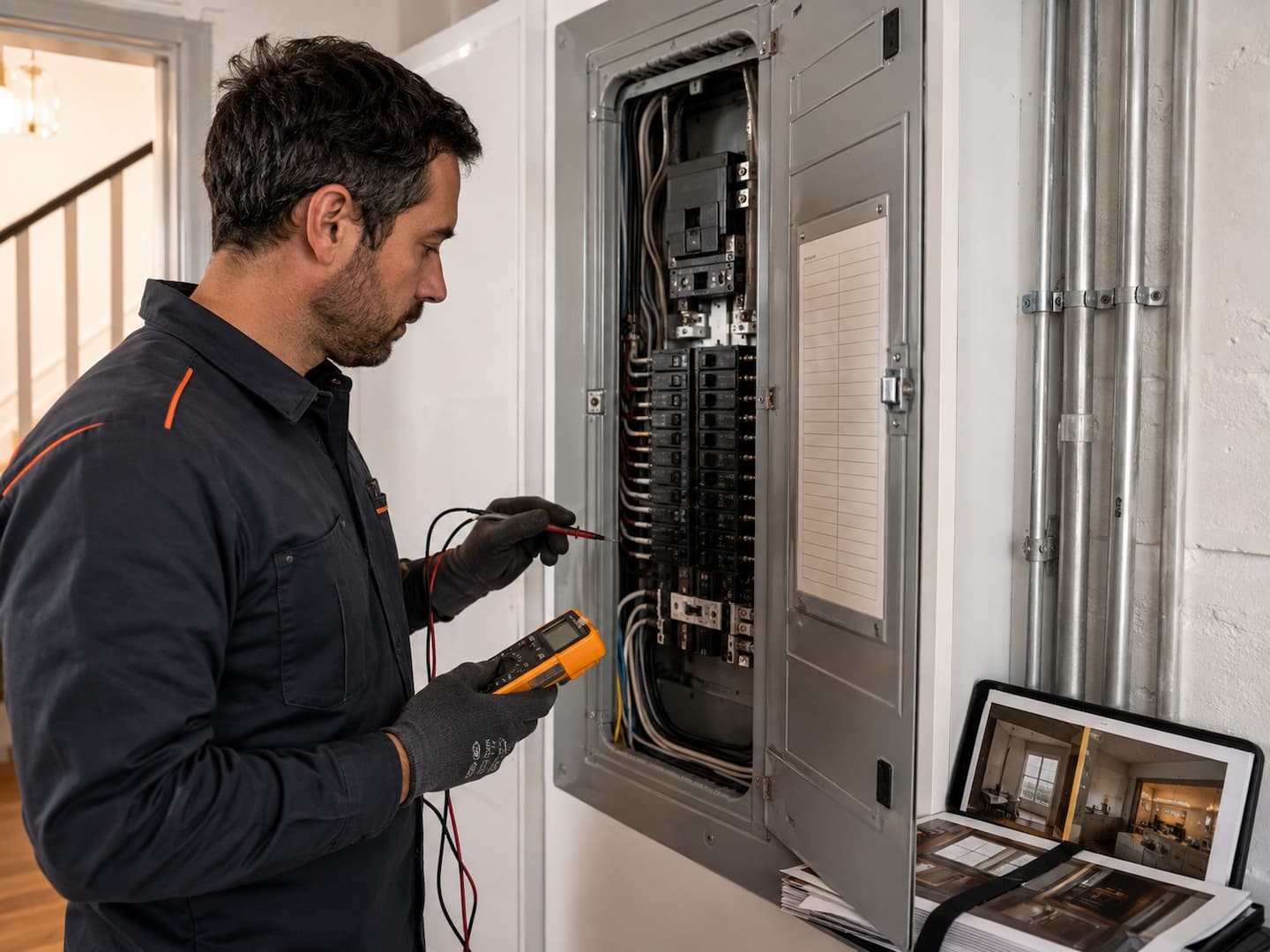
Circuits are tested and labeled, required inspections are completed, and the owner receives a clear handoff of the completed electrical scope.
One electrical plan, connected scopes
Services that often belong in the same plan
- Electrical panel and service-capacity planning
- Grounding and bonding corrections
- AFCI and GFCI protection
- Whole-house surge protection
- Smoke and carbon monoxide alarm installation
- Smart-home and structured-wiring preparation
- Fixture, dimmer, and switch upgrades
- Aluminum branch-circuit assessment and correction
- Knob-and-tube replacement cost and estimate guide
What trust looks like on a technical project
Clear boundaries are part of good workmanship
Older-home electrical work rewards careful diagnosis. The owner experience also depends on a readable scope, honest limits, and a handoff that another electrician, inspector, or future owner can understand.
- We do not call concealed wiring “cleared” when it was not observed or tested.
- We do not guarantee an insurer’s underwriting decision.
- We do not assume a 200-amp panel is required without reviewing the load and project goals.
- We do not hide patching, paint, utility, or access assumptions in vague proposal language.
- We explain which legacy conductors were removed, which were left physically in place but disconnected, and how inactivity was verified within the scope.
Local building types, local access problems
Rewiring across San Francisco
We work with older single-family homes, condos, TIC interests, flats, and small multi-unit properties throughout San Francisco. Neighborhood names are useful context, not a substitute for looking at the building.
Common service areas include Pacific Heights, Presidio Heights, the Richmond, the Sunset, Noe Valley, Bernal Heights, Haight-Ashbury, Cole Valley, the Castro, the Mission, Glen Park, Potrero Hill, and nearby neighborhoods.
Access planning also changes with the building. Compare our guidance for a Pacific Heights Victorian, a San Francisco Edwardian, a Craftsman home, or a Mission-style house.
Before the visit
If available, gather the insurer’s request, home-inspection pages, permit history, renovation plans, and photos of accessible wiring. Clear safe access to the panel, attic hatch, basement, and crawlspace entrance. Do not remove panel covers or touch exposed wiring yourself.
Straight answers before you schedule
Knob-and-tube replacement questions
Does every San Francisco home with knob-and-tube wiring need a full rewire?
No single answer fits every property. The extent of active wiring, conductor condition, alterations, insulation, loads, planned work, and insurance or transaction requirements all matter. An inspection should define the real scope before a replacement decision.
Can you tell whether old wiring is active without opening every wall?
Often we can establish a useful circuit map through accessible observations and electrical testing, but concealed pathways still create limits. The report or proposal should say what was verified, how it was tested, and what could not be confirmed without access.
Will you need to damage original plaster?
Many routes can be reached from attics, basements, closets, existing openings, or unfinished areas. Some homes still require planned access holes. We discuss likely locations and finish-work responsibility before installation; “no wall damage” should not be promised before the routes are known.
How much does knob-and-tube wiring replacement cost in San Francisco?
A reliable price requires a property-specific scope. Active circuit count, access through finished surfaces, occupancy, panel or service work, required protection, permits, testing, and finish repair all affect cost. We inspect first, then provide a written proposal that distinguishes included work, options, assumptions, and exclusions.
Can we remain in the house during rewiring?
Sometimes. It depends on scope, occupancy, dust-control needs, available circuits, and how the work can be phased. The schedule should identify working rooms, planned outages, and the condition in which the home will be left at the end of each day.
Does a new electrical panel mean the knob-and-tube is already gone?
No. A modern panel can feed older branch circuits. Panel condition, service capacity, and branch wiring are related but separate questions.
Will replacement guarantee homeowners insurance?
No contractor can bind an insurance carrier. We can document observable conditions and completed work so the carrier has better information. Ask the insurer exactly what it requires and whether it has a preferred form, date range, or proof of permit completion.
Do knob-and-tube rewires require permits in San Francisco?
Installing new wiring and materially altering an electrical system generally requires an electrical permit and inspections. The exact permit path depends on the property and scope. We confirm requirements for the job rather than treating every project as identical.
Start with the property you actually have
Get a clear, home-specific plan for old wiring
Tell us whether the issue came from an inspection, an insurance request, a renovation, or a symptom. We will help you choose the right first visit and define what information to have ready.
Planning references
For current local requirements, consult the San Francisco Department of Building Inspection, the City’s electrical inspection guidance, and DBI’s code and inspection resources. Requirements can change and the authority having jurisdiction decides how they apply to a particular project.