
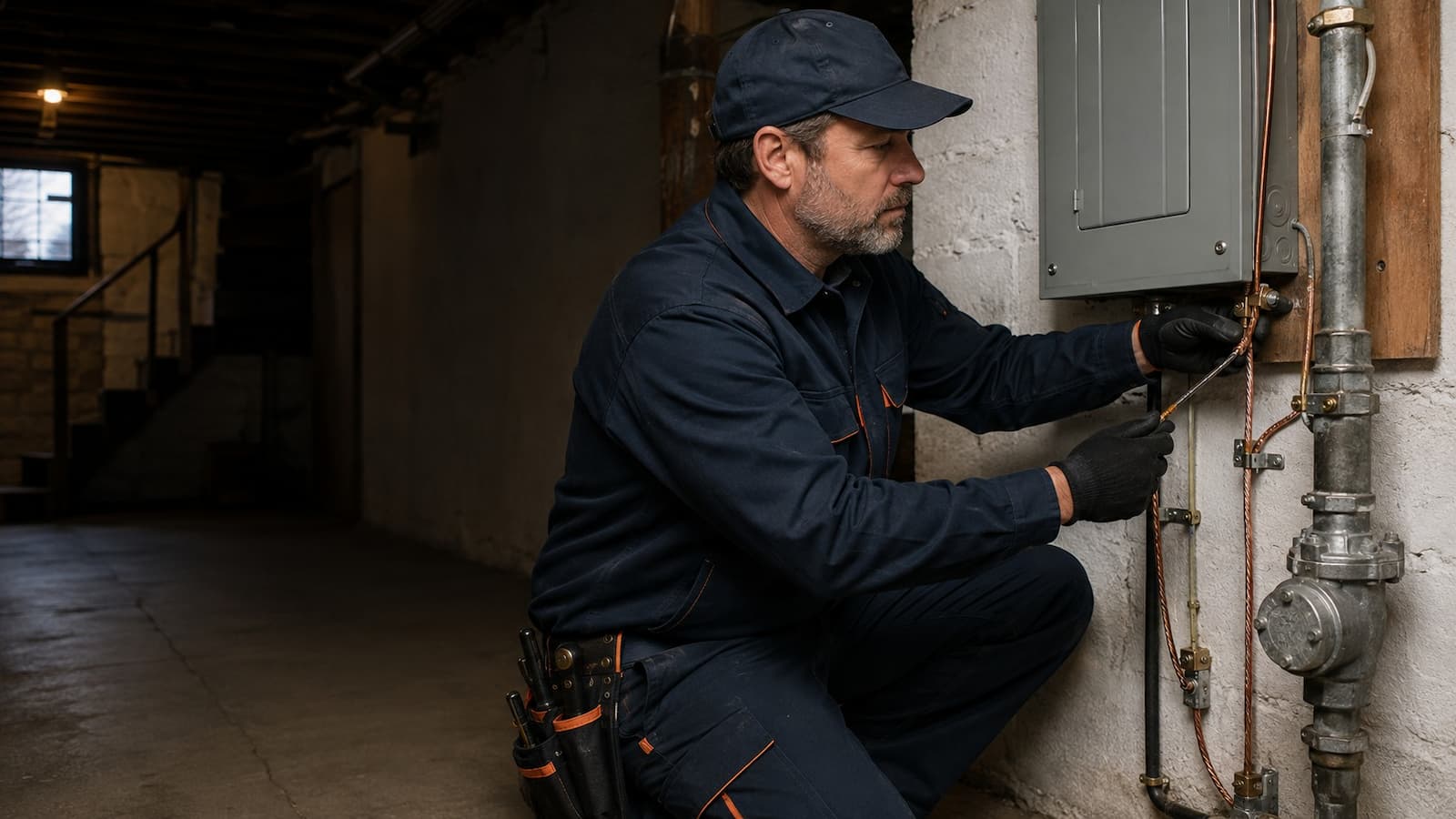
Fault-current paths for older electrical systems
Grounding & Bonding Installation in San Francisco
Identify missing or unreliable safety paths at the service, panel, metal equipment, branch circuits, and piping systems—then correct the scope without pretending one ground rod fixes every ungrounded outlet.
Three related systems
Grounding and bonding are not one wire
Grounding electrode system
Connects the electrical service to qualifying grounding electrodes and helps establish the system’s reference to earth. It is part of the service safety design.
Equipment grounding
Provides a low-impedance fault-current path from metal enclosures and equipment back toward the source so protective devices can operate.
Bonding
Connects conductive parts that should remain at the same electrical potential and creates continuity across service equipment and required metal systems.
Common misconception: a grounding electrode at the service does not add an equipment-grounding conductor to old two-wire branch circuits. The service and the outlets must be evaluated separately.
Why owners request the work
Symptoms, projects, and inspection findings
- Two-prong receptacles or unverified three-prong replacements
- Open or inconsistent equipment grounds
- Panel or service replacement
- Solar, battery, generator, EV, HVAC, or surge-protection work
- Water, gas, or other metal piping changes
- Home-inspection, insurance, or permit corrections
- Shock, tingle, or voltage concerns that require prompt diagnosis
Inspection before correction
Follow the path from the service to the equipment
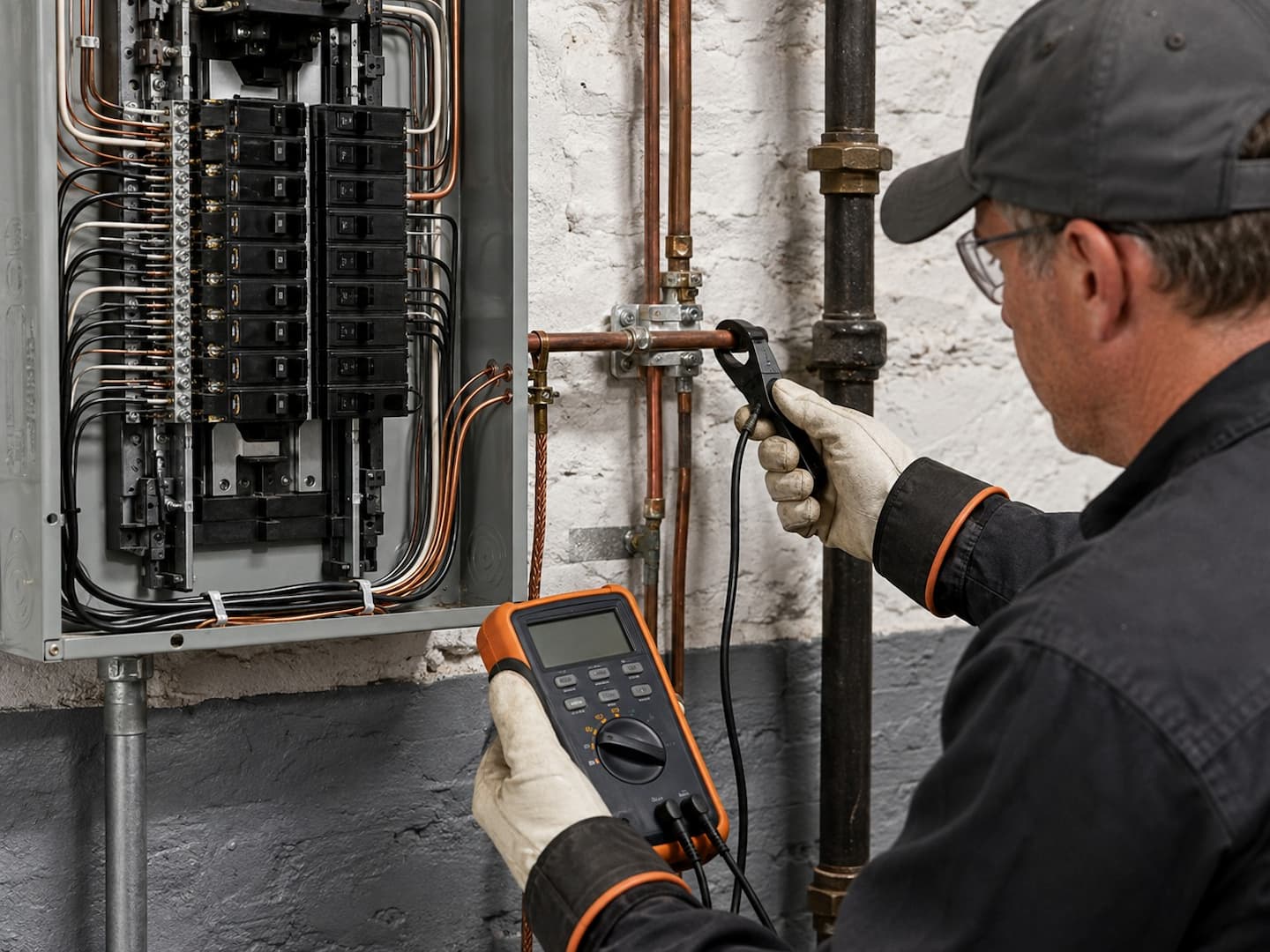
We review accessible grounding electrodes and conductors, service bonding, panel separation where applicable, metal enclosures, branch-circuit equipment grounds, and required bonding of metal systems. The exact path depends on the service configuration and building.
Testing is selected for the scope. A plug-in tester can identify some conditions at a receptacle, but it cannot replace a full understanding of how the service, panel, box, and conductor path are connected.
Correction options
The right fix depends on where continuity is missing
System dependencies
Grounding and bonding support other upgrades
Grounding and bonding FAQ
Common older-home questions
Will a ground rod make old two-prong outlets grounded?
No. A service grounding electrode and a branch-circuit equipment-grounding conductor serve different functions. The branch-circuit path must be addressed separately.
Does GFCI protection create a ground?
No. It can reduce shock risk and may be permitted in certain ungrounded replacement situations with required labeling, but it does not provide an equipment-grounding path for equipment that needs one.
Can water piping be used as the only grounding solution?
Grounding electrode and bonding requirements depend on the actual system and materials. Piping alterations and nonmetallic sections can interrupt continuity. The service must be evaluated as a whole.
Why is the neutral bonded in one panel but isolated in another?
Bonding location depends on the service and feeder configuration. Improper downstream neutral-to-ground connections can put current on metal paths, so the panels must be reviewed in context.
Can grounding be added without a full rewire?
Sometimes targeted approved paths or corrections are possible. In other homes, replacing selected or widespread two-wire branches is the clearer long-term solution. Access and the equipment served affect the choice.
Unsure whether the outlets are truly grounded?
Test the path, then correct the right part of the system
Our electricians can evaluate service grounding, panel bonding, branch-circuit paths, and related metal systems.