
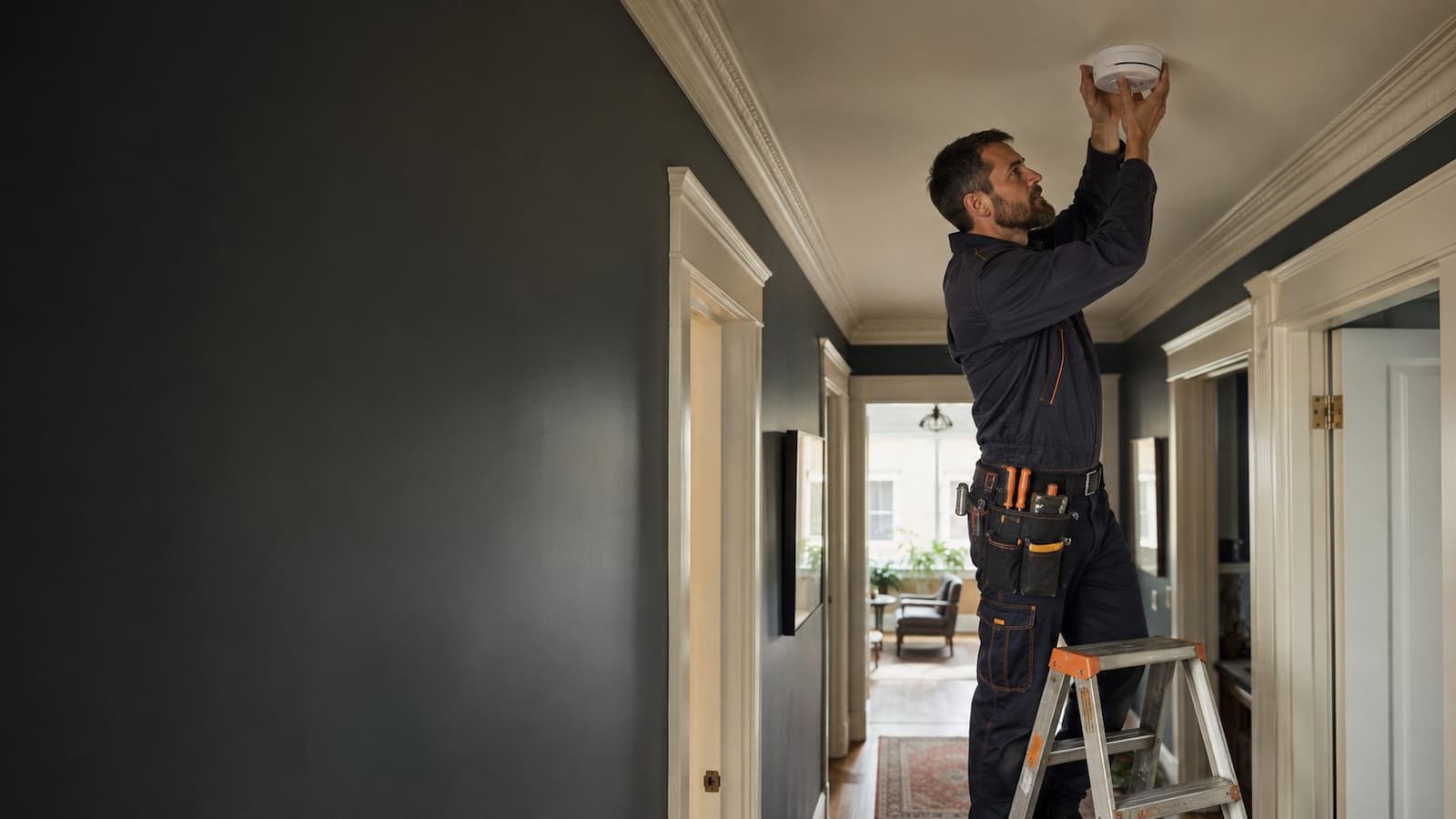
Correct device · correct location · verified operation
Smoke & Carbon Monoxide Detector Installation in San Francisco
Place and interconnect alarms for the home and project in front of us, replace incompatible or expired units, and finish with testing and an owner-ready device record.
More than attaching a device
Placement and system behavior determine whether an alarm plan works
Smoke alarms are generally expected in sleeping rooms, outside sleeping areas, and on each level of a dwelling. Carbon monoxide alarm requirements depend on conditions such as fuel-burning appliances or an attached garage and include locations outside sleeping areas and on levels of the home. Exact requirements and allowed power methods depend on building type, existing conditions, and the work being performed.
We review the current layout, device age and compatibility, power source, interconnection, room use, ceiling form, cooking proximity, air movement, and project trigger before specifying replacements.
A room-by-room plan
What we check
Coverage
Sleeping rooms, sleeping-area approaches, levels, basements, attached garages, fuel-burning equipment, and unusual floor plans.
Placement
Ceiling or wall position, corners, sloped ceilings, cooking appliances, fans, registers, bathrooms, and other sources of nuisance alarms or delayed sensing.
Power and interconnection
Existing hardwiring, backup power, compatible interconnect conductors or listed wireless interconnection, and what the current project requires.
Device suitability
Smoke, carbon monoxide, or combination function; listing; replacement date; manufacturer compatibility; and accessibility needs.
Legacy wiring
Box support, conductor condition, grounding where relevant, circuit identification, and whether old wiring should be replaced rather than disturbed.
Handoff
Functional test, interconnection test where applicable, device locations, dates, instructions, and recommended owner test routine.
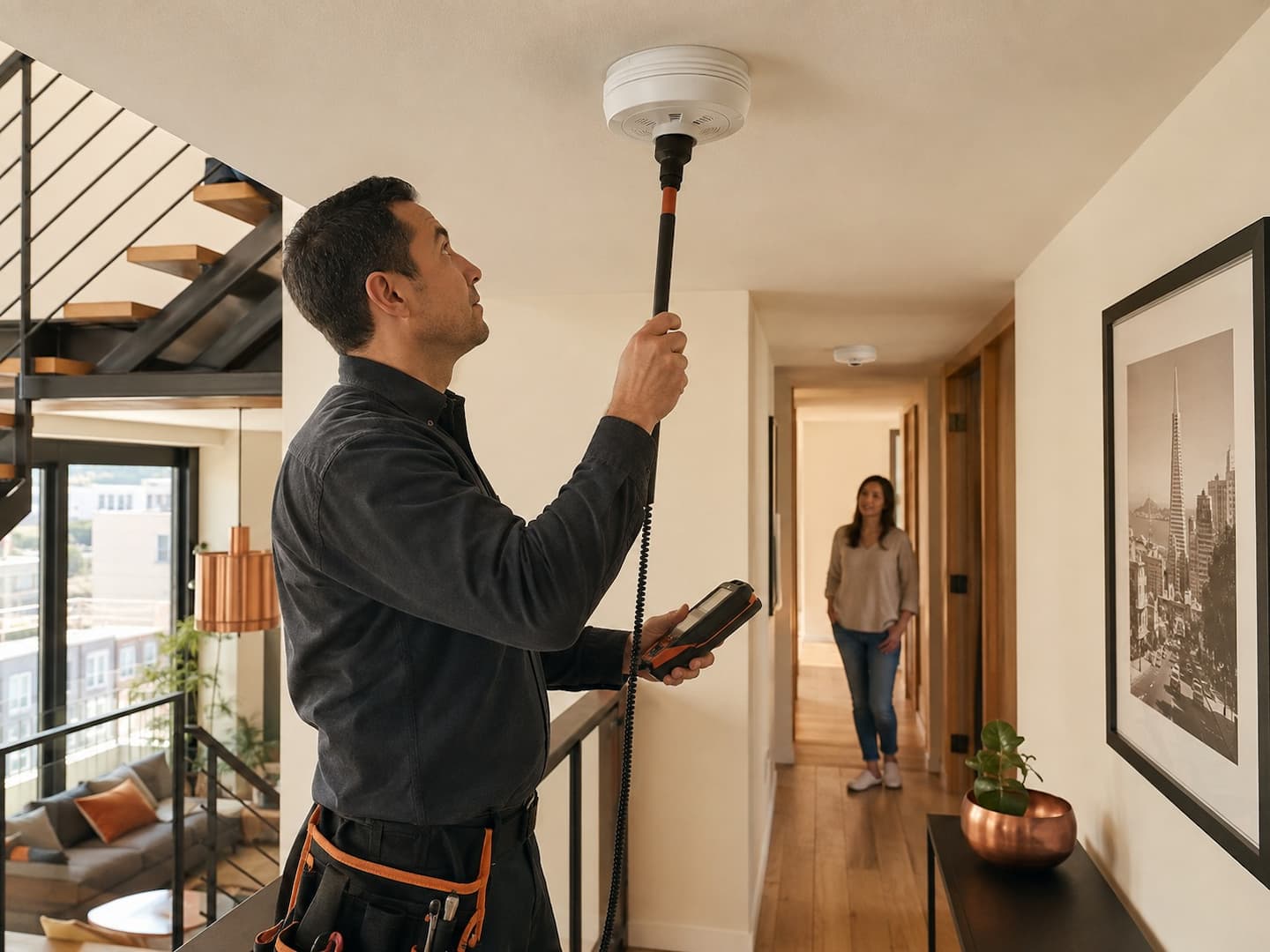
Existing homes need a real survey
Interconnection requires compatible devices and a verified test
Hardwired alarms from different generations or manufacturers may not interconnect correctly. Wireless features also depend on listed compatibility, configuration, and power. We identify the existing arrangement and replace or group devices as a system when required.
If a renovation or rewire changes the applicable requirements, the alarm scope should be coordinated with the permitted electrical work. That may be more efficient than a separate device-only visit.
When to schedule
Common reasons owners call
- Renovation, addition, or electrical permit work
- Sale, rental, or insurance documentation
- Expired, chirping, damaged, painted, or missing alarms
- Unclear coverage in a multi-level or remodeled layout
- Need for interconnected or accessibility-supporting devices
- Legacy wiring at existing alarm locations
Alarm installation FAQ
Questions about replacements and upgrades
Can you replace only the alarm that is chirping?
Sometimes, but first identify why it is chirping, its age, power source, interconnection, and compatibility with the remaining devices. A system approaching replacement age may be better handled together.
Do all existing homes need hardwired alarms?
The answer depends on the building, existing conditions, and the work triggering the requirement. New construction and certain alteration scopes can be treated differently from simple maintenance. We confirm the applicable path for the project.
Are combination smoke/CO alarms always the best choice?
They can simplify some layouts, but device type, placement, sensing requirements, interconnection, accessibility, and manufacturer instructions still matter.
Can alarms be connected to old knob-and-tube wiring?
Legacy circuit condition and the proposed installation must be evaluated. A new or altered alarm circuit should not rely on an unsafe or unsuitable connection merely because power is nearby.
Need a room-by-room alarm plan?
We install, interconnect, test, and document the system
Tell us about the building, fuel-burning equipment, attached garage, remodel scope, and existing alarms when you request scheduling.
Code reference
For current local provisions, use DBI’s California and San Francisco code resources, including the Building, Fire, Housing, and Electrical Codes. Device instructions and the authority having jurisdiction also apply to the installation.