

Condition · capacity · coordination
Electrical Panel Upgrade in San Francisco
Choose the panel and service scope from a load calculation, equipment plan, existing-condition review, and utility requirements—not from a one-size-fits-all amp number.
Name the project correctly
Panel replacement and service upgrade are related, not identical
A panel replacement changes the distribution equipment. A service upgrade may also affect conductors, meter equipment, service location, grounding and bonding, utility infrastructure, and permits. Some projects need one; some need both.
A residential electrical panel installation should therefore begin with the reason for the work: damage or obsolete equipment, lack of circuit spaces, a remodel, new electric loads, insurance concerns, solar or storage coordination, or widespread branch-circuit replacement. That reason determines which parts of the service belong in the project.
Decision inputs
What determines the right capacity and scope
Existing service
Main rating, conductor and meter configuration, panel condition, spaces, fault-current context, grounding, and utility point of connection.
Calculated and managed load
Existing demand plus selected heat pump, water heating, cooking, dryer, EV, solar, storage, or other equipment—and whether listed load management fits the project.
Future plan
Realistic projects within the planning horizon, not a vague request to make the home “future-proof.”
Location and access
Working clearance, egress, weather exposure, finished interiors, property lines, meter access, and route length.
Utility infrastructure
PG&E review may be needed to confirm whether the service path, transformer, conductors, or other utility equipment can support the request.
Permit scope
Electrical work, possible building impacts, inspection sequence, and restoration should be identified before installation.
Electrification without guesswork
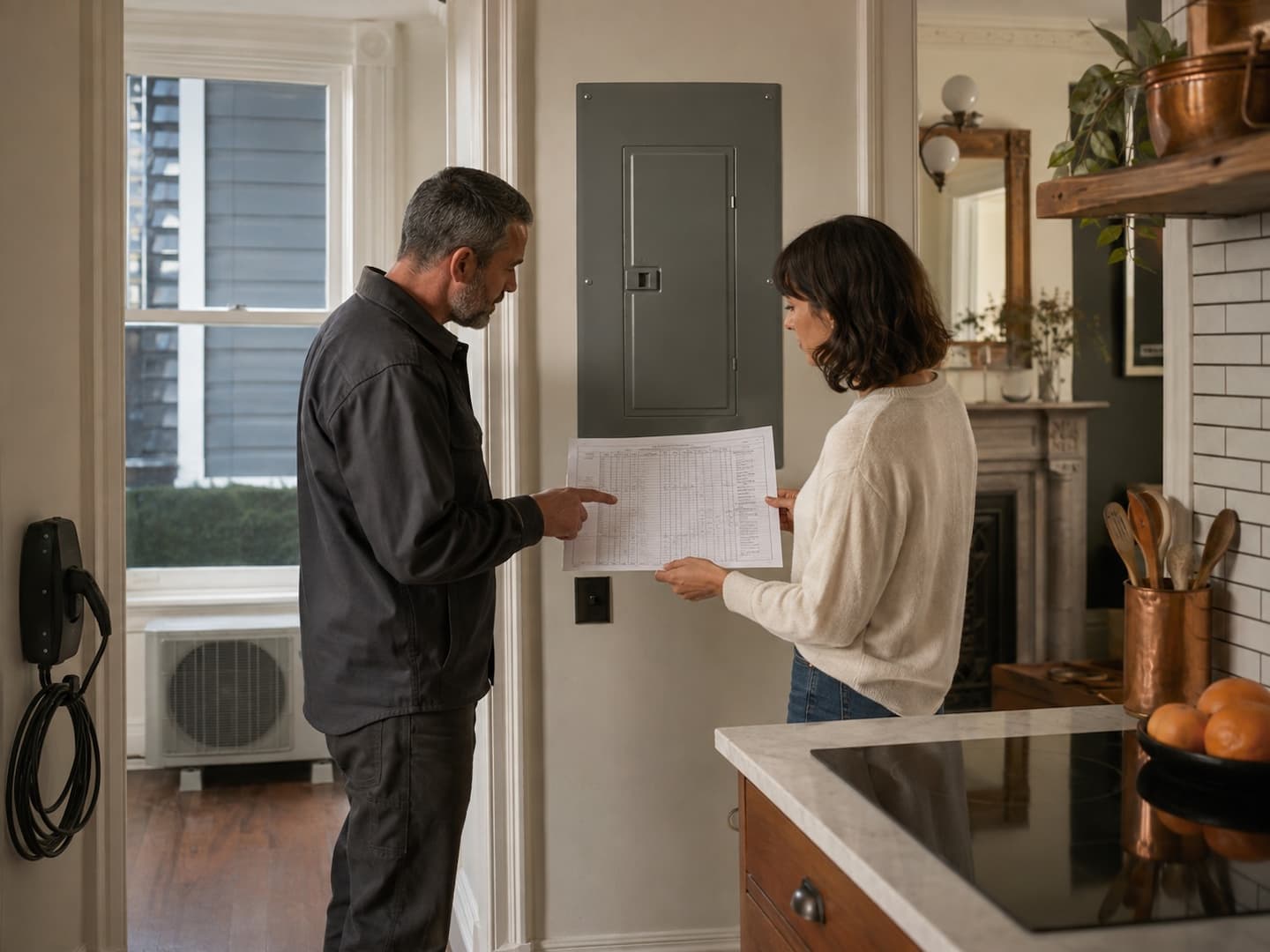
Buying the appliance first can make the electrical plan harder
Heat pumps, induction cooking, electric water heating, dryers, and EV charging have different demand and control options. Model numbers, nameplate data, operating priorities, and future equipment matter.
We review those loads with the existing service and panel. In some homes a larger service is appropriate. In others, a panel reconfiguration, selected equipment, or listed load-management strategy can meet the goal with less utility-side work. Feasibility is property-specific.
The coordination path
How a panel project moves
Site and load assessment
Inspect the existing equipment, grounding and bonding, service route, branch-circuit context, selected loads, and likely location constraints.
Utility and permit strategy
Identify whether PG&E review or infrastructure work is required and define the City permit and inspection path.
Written scope
Specify panel, main rating, circuits, surge protection, grounding/bonding corrections, meter or service work, outages, patching, and responsibilities.
Scheduled installation
Coordinate shutdown, utility work if required, installation, labeling, tests, and inspection milestones.
Final handoff
Provide an accurate directory, equipment information, permit status, and explanation of any remaining legacy branch circuits.
What the quote should make visible
Compare the same scope
- Panel versus full service work
- Main rating and load basis
- Meter, disconnect, and utility responsibilities
- Grounding and bonding corrections
- Surge protection and protective breakers
- Branch-circuit modifications
- Permit, inspection, labeling, cleanup, and restoration
- Planned outage and schedule dependencies
Connected scopes
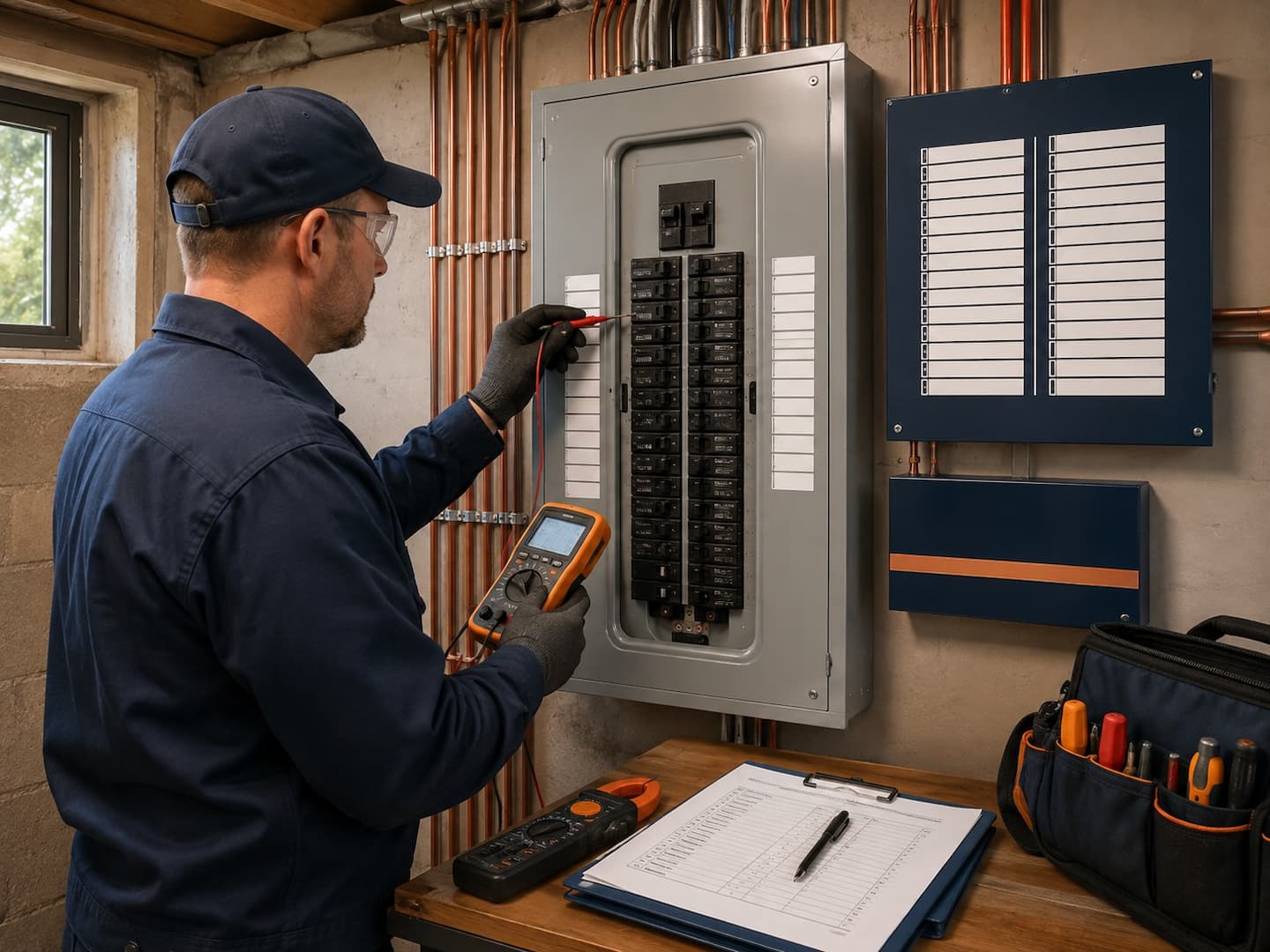
Plan the safety backbone together
Panel upgrade FAQ
Capacity and coordination questions
Does every older home need a 200-amp service?
No. Capacity should follow a load calculation, equipment plan, existing service, panel condition, future use, and utility constraints. A familiar amp number is not a substitute for design.
Can the panel be replaced without PG&E?
Some panel work has limited utility involvement; a service change may require more. The existing configuration and proposed scope determine coordination. Confirm it before ordering equipment or scheduling an outage.
Will a new panel stop breakers from tripping?
Only if the cause is addressed. Trips can result from overloads, faults, damaged wiring, appliances, shared neutrals, or protective-device operation. Diagnosis belongs before replacement.
Can old knob-and-tube circuits connect to the new panel?
A new panel can physically feed older branches, but their condition, overcurrent protection, circuit arrangement, grounding limits, project scope, and insurer requirements still need review.
How long will power be off?
The outage depends on whether the project is panel-only or includes meter, service, utility, grounding, or correction work. The written schedule should identify the planned shutdown and dependencies.
Is a hot, sparking, or smoking electrical panel an emergency?
Yes. Keep away from the equipment. If there is smoke, fire, or immediate danger, leave the building and call 911. For a utility outage or damaged service line, contact PG&E. Do not wait for a routine estimate or use the contact form as an emergency channel.
Planning new electric loads?
Assess capacity before choosing the panel
Send equipment models and future plans when possible. We will review the existing system and define the panel, service, permit, and utility scope.
Utility and permit references
PG&E’s electrical panel upgrade roadmap describes the roles of the customer, contractor, local authority, and utility. San Francisco electrical inspection information is available through DBI’s inspection page.