
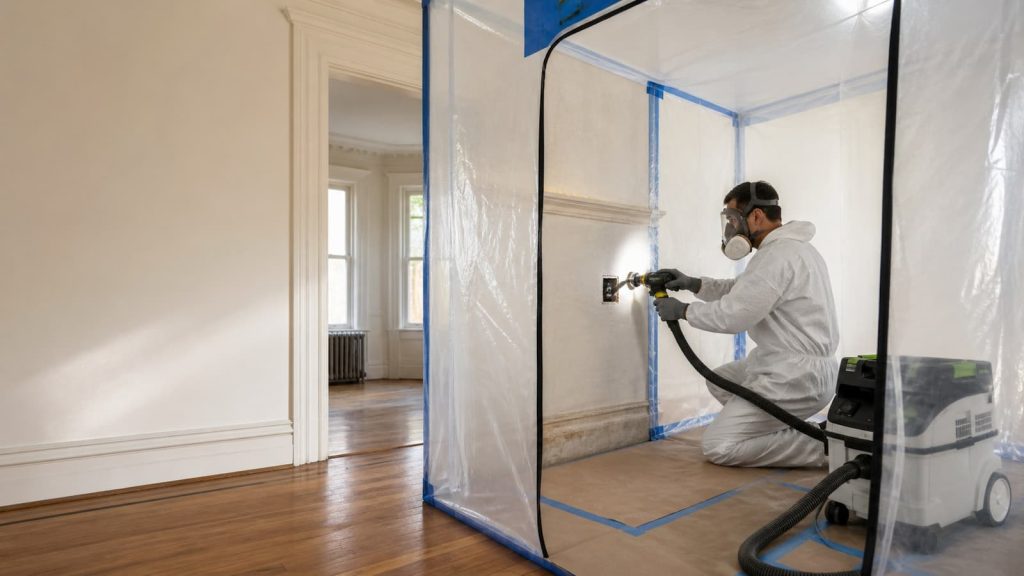
Replacing knob-and-tube wiring in a prewar San Francisco home often means working through painted plaster. The electrical hazard may be the reason for the project, but dust control determines how safely the household lives through it. Small openings at switches and ceilings can spread fine debris much farther than their size suggests, especially when several rooms are opened in one day.
Plaster dust and lead dust are not synonyms. Lead risk usually comes from disturbing old painted coatings on walls, trim, ceilings, and repair layers. Plaster and joint compounds can introduce other respiratory hazards. The work plan should address the materials actually present rather than calling all old-house dust harmless—or treating every speck as the same contaminant.
Federal lead-safe renovation rules cover many paid electrical projects that disturb paint in pre-1978 housing. San Francisco also has local work-practice rules for lead-based paint and pre-1979 buildings. A contractor’s promise to “vacuum as we go” is not a complete containment plan.
Why a Rewire Disturbs Painted Surfaces
Electricians often route new cable from an attic, basement, crawlspace, closet, or existing device opening. Good planning can limit damage, but finished homes still may need access holes. Typical disturbance points include:
- Switch and receptacle boxes that must be enlarged or replaced.
- Ceiling openings near light fixtures.
- Small holes at the top or bottom of stud bays for drilling and fishing.
- Longer channels where blocked framing prevents a cable pull.
- Panel, subpanel, and feeder routes.
- Repairs around damaged old boxes and fixtures.
Each opening may cross several generations of paint. Cutting, drilling, scraping, and demolition can turn those coatings into chips and fine particles. Dust then moves on shoes, tools, drop cloths, HVAC airflow, and ordinary household traffic.
The Federal Pre-1978 Rule Includes Electrical Work
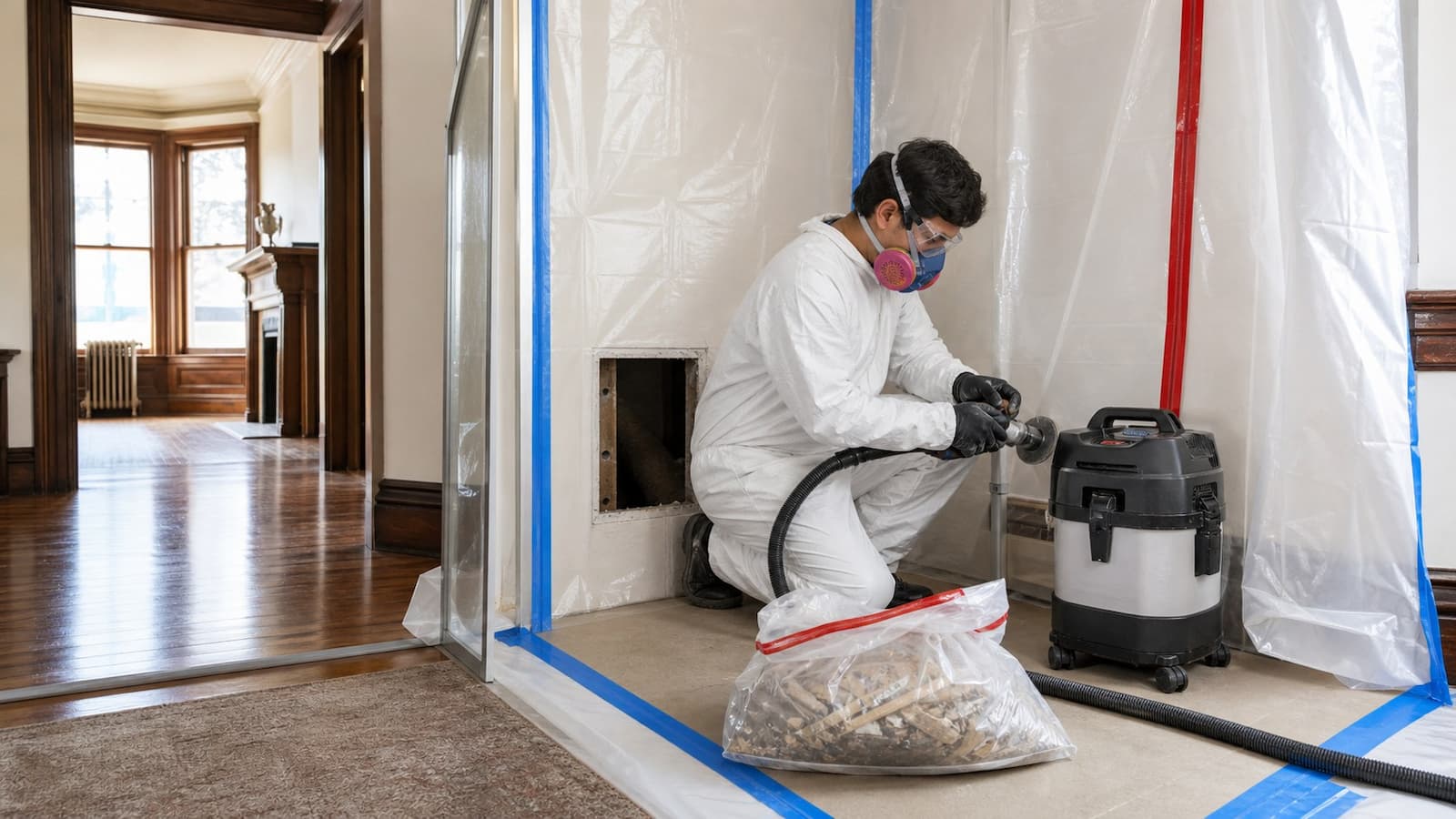
The U.S. Environmental Protection Agency’s Renovation, Repair and Painting Rule applies to many paid projects that disturb painted surfaces in homes and child-occupied facilities built before 1978. EPA specifically lists electrical work and electricians among the covered activities and trades. Covered firms must be certified, use certified renovators, provide required education, follow lead-safe work practices, and keep records.
EPA describes a minor repair and maintenance exception for work disturbing no more than six square feet of painted surface per room inside or 20 square feet outside. That exception has important limits. Window replacement, demolition of painted surfaces, and prohibited practices can remain covered regardless of area. A whole-house rewire can involve multiple openings and demolition, so no one should assume “each hole is small” resolves the rule.
Read EPA’s current RRP guidance for contractors and its homeowner guidance. The agency updated its lead-safe renovation materials in 2026.
San Francisco Uses a Pre-1979 Framework
San Francisco Building Code Section 327 regulates work that disturbs lead-based paint and creates debris in covered residential occupancies and on the exterior of pre-1979 buildings, with detailed definitions, performance standards, and exemptions. The local rule addresses restricting access, containing debris, cleaning, and preventing migration from the work area.
The local text includes a provision for the interior of certain owner-occupied pre-1979 dwelling units. Even where that exemption applies, responsible parties must take reasonable measures to prevent work debris from migrating into common areas or outside the unit. A condo owner cannot treat the shared hallway as part of the work zone.
Review San Francisco Building Code Section 327 with the contractor. Federal and local requirements can apply at the same time, and the more protective obligation still needs attention.
Should You Test the Paint?
There are two practical approaches: presume affected coatings contain lead and use lead-safe practices, or obtain valid testing for the surfaces that will be disturbed. A hardware-store result used casually by an untrained person may not satisfy the rules or answer for every layer and location.
EPA explains that an inspection or risk assessment can be performed by appropriately certified professionals. For RRP decisions, certified renovators may use recognized test kits, and paint-chip samples can be analyzed through recognized laboratories. Testing one wall does not clear different trim, ceiling, and patch materials throughout the house.
Presumption is often efficient when a rewire will create many small access points and the home clearly predates 1978. Testing can be valuable when results would materially change the access plan or containment scope. Decide before bidding so every contractor prices the same assumptions.
What a Lead-Safe Rewire Plan Should Include
A room-by-room access map
The electrician should mark expected openings, cable routes, drilling locations, panel work, and uncertain areas. This allows the renovation team to estimate disturbed surface area, define work zones, and protect the right rooms.
Containment before cutting
Protect floors and fixed surfaces, restrict access, isolate the work area, and seal or manage air pathways as required. Containment must be in place before the first painted surface is disturbed, not after dust appears in the hallway.
Dust collection at the tool
Use methods and tools that minimize dust and capture it close to the cut. EPA’s lead-safe materials prohibit certain high-dust practices and address HEPA exhaust control for power tools. A household shop vacuum is not automatically a HEPA system suitable for regulated lead work.
Debris handling
Paint chips, plaster fragments, disposable sheeting, and vacuum waste should be contained before they leave the work area. Open buckets and unsealed trash bags can contaminate stairs, elevators, and vehicles.
Cleaning and verification
The project is not clean because the large debris is gone. Lead-safe work includes a defined cleaning sequence and required verification. Put responsibility for final cleaning and signoff in the contract, particularly when the electrician and patching contractor are different companies.
| Phase | Electrical team | Lead-safe/finish team | Owner |
|---|---|---|---|
| Planning | Maps circuits and openings | Defines containment and testing assumptions | Discloses occupancy, children, pets, and access limits |
| Rough work | Uses agreed routes and reports scope changes | Maintains containment and debris controls | Keeps occupants out of work zones |
| Inspection | Keeps wiring visible for required review | Maintains safe barriers while walls remain open | Does not remove containment early |
| Close-up | Confirms electrical work is ready to cover | Patches using controlled methods | Approves documented finish scope |
| Cleaning | Removes electrical tools and waste properly | Performs cleaning and required verification | Reoccupies after clearance under the project plan |
Plaster Repair Is a Separate Scope
Many electrical proposals exclude patching and painting. Others include a basic patch but not texture matching, decorative trim, primer, or full-wall painting. In a lead-safe project, the handoff between the electrical and finish contractors also determines who owns containment and cleanup.
Ask the proposal to state:
- Who makes and enlarges access openings.
- Who supplies containment while openings remain exposed.
- Who removes loose plaster and stabilizes edges.
- Whether the patch will match lath-and-plaster thickness and texture.
- Whether primer and paint are spot-applied or carried to natural breaks.
- Who performs final HEPA cleaning and any required verification.
- What happens when an unexpected route requires another opening.
Photograph walls, trim, and floors before work. A dated room record helps distinguish existing cracks and paint damage from construction damage without an argument at the end.
Protecting Children, Pregnant People, Pets, and Tenants
Lead exposure is especially concerning for young children and during pregnancy. Pets can also track dust on paws and fur. The safest occupancy plan depends on the number of rooms, containment layout, duration, and the contractor’s lead-safe procedures.
- Keep children and pets out of work areas and away from stored debris.
- Do not route occupants through containment to reach bedrooms or bathrooms.
- Move food, dishes, toys, clothing, and soft furnishings out of affected zones or seal them as the plan specifies.
- Coordinate power outages for refrigerators, medical devices, internet equipment, and building access systems.
- Give tenants written notice describing rooms, dates, access, outages, and re-entry expectations.
- If safe separation cannot be maintained, plan temporary relocation rather than improvising after demolition begins.
The electrical schedule itself varies with access and house size. Our guide to realistic knob-and-tube rewire timelines helps owners estimate how long rooms and circuits may be disrupted.
Questions to Ask Every Bidder
- Is your firm EPA Lead-Safe Certified for covered renovation work?
- Who is the certified renovator responsible for this project?
- Which painted surfaces do you expect to disturb in each room?
- Are you presuming lead or relying on valid test results?
- How will you capture dust while drilling and cutting?
- How will you prevent dust from entering common halls and HVAC returns?
- Who maintains containment between electrical rough-in and plaster repair?
- What cleaning verification and records will I receive?
- Is patching, priming, painting, and texture matching included?
- What other hazardous-material testing is recommended before opening assemblies?
Electrical expertise and lead-safe renovation expertise overlap, but they are not identical. The prime contractor should explain how the licensed electrician, certified renovator, patching crew, and cleaner will coordinate.
After the Work: Keep More Than the Final Invoice
- Pre-renovation education acknowledgment and lead-safe records.
- Paint testing or presumption documentation.
- Contractor and renovator certification information.
- Photographs of access openings and new wiring before patching.
- Electrical permit and final inspection records.
- Cleaning verification and any clearance results included in the contract.
- A circuit map and statement identifying any active knob-and-tube that remains.
These records are useful when a later owner, insurer, electrician, or renovation team asks what happened behind the repaired plaster.
Frequently Asked Questions
Does every pre-1978 wall contain lead paint?
No, but older housing is more likely to contain it, and several paint layers may be present. EPA says the simplest safe approach for a pre-1978 home is to presume lead unless appropriate testing establishes otherwise for affected components.
Is plaster itself the lead hazard?
Often the main lead concern is the old painted coating disturbed with the plaster. Plaster and patching materials can create other dust hazards, so dust control and respiratory protection still need to match the materials and work methods.
Can the electrician make several small holes under the six-square-foot exception?
Do not assume that strategy qualifies. The threshold is measured per room for interior work, and demolition or prohibited practices can defeat the minor-repair exception. Covered firms must evaluate the full job under the RRP Rule.
Can we stay in the house during rewiring?
Sometimes, when work zones can be securely isolated and essential rooms remain accessible. A broad project, vulnerable occupants, or a layout that forces people through containment may make temporary relocation safer.
Does the electrician repair the plaster?
Only if the contract says so. Many electrical bids exclude finish restoration. Assign patching, painting, containment handoff, and final cleaning before work starts.
Clean Electrical Work Includes Dust Planning
A careful rewire protects more than conductors and breakers. In a pre-1978 San Francisco home, it also protects occupants from dust created while reaching the old system. Map openings, settle the lead assumption, hire properly qualified firms, contain before cutting, keep barriers through patching, and document the cleanup. That work belongs in the project scope from day one.
This article is general educational information and does not replace a site-specific lead assessment, occupational-safety plan, or legal advice. Confirm current federal, state, and San Francisco requirements for the property and scope.