
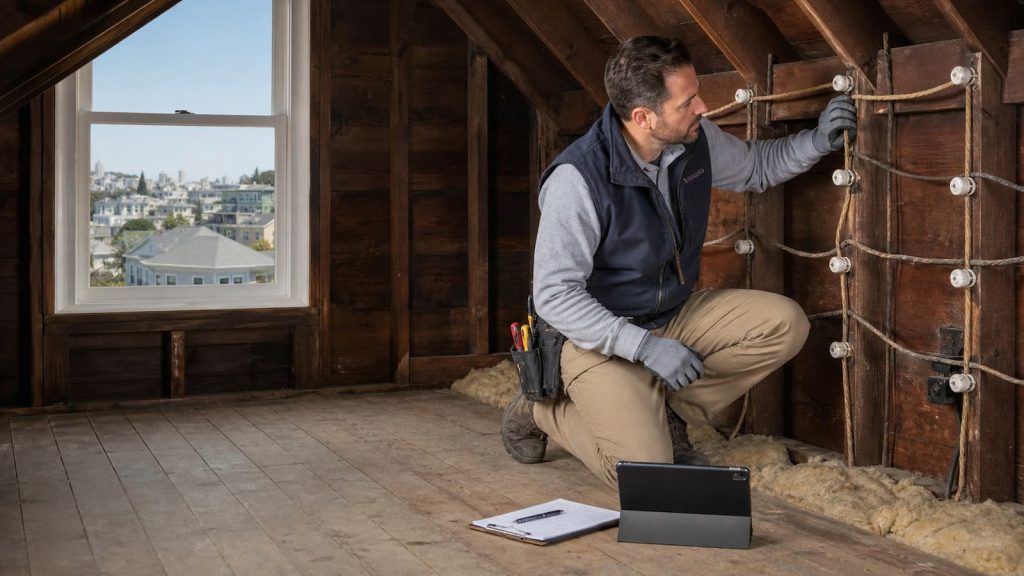
A knob-and-tube problem can stop an energy-efficiency project before the first bag of insulation is opened. In 2026, BayREN created a limited-time incentive to deal with that exact roadblock: eligible EASE Home participants may receive up to $2,000 toward remediation of active knob-and-tube wiring, or $300 toward the cost of documenting that the old wiring is inactive.
The money is useful, but the sequence matters. This is not a general rebate for any electrical work completed anywhere in the Bay Area. It is tied to an EASE Home project, requires documentation from a licensed electrician, and is meant to help a qualifying household move ahead with covered energy upgrades. A homeowner who rewires first and asks questions later may discover that the work, paperwork, or project scope does not fit the program.
The details below cover what BayREN published, the inspection sequence, records worth keeping, and the difference between inactive wiring and old conductors that merely look abandoned. Program terms and funding can change, so confirm current availability with EASE Home before authorizing work.
What the 2026 Knob-and-Tube Incentive Covers
BayREN announced two limited-time knob-and-tube rebates for 2026 through its EASE Home program:
- Up to $2,000 to remediate active knob-and-tube wiring.
- $300 to obtain certification from a licensed electrician that knob-and-tube wiring is inactive.
BayREN says the incentive is applied to the customer’s EASE Home project. It is designed to remove a barrier to improvements such as insulation, duct work, air sealing, and induction cooking. It does not turn a whole-house rewire into a free project, and “up to $2,000” should not be read as a promise that every applicant will receive the maximum.
| Electrical finding | Published 2026 incentive | Typical documentation |
|---|---|---|
| Active knob-and-tube must be remediated | Up to $2,000 | Electrician invoice plus certification that the knob-and-tube is inactive after the work |
| Old knob-and-tube is already inactive | $300 | Inspection invoice plus licensed-electrician certification of inactivity |
| No qualifying EASE Home project | Do not assume eligibility | Confirm program pathway before scheduling electrical work |
The official BayREN announcement dated June 8, 2026 describes both amounts and the documentation requirement. Because the offer is expressly limited-time, a screenshot of an old announcement is not enough. Ask the program to confirm that funds remain available and that your proposed scope qualifies.
EASE Home Eligibility Comes First
EASE Home is broader than an electrical rebate. BayREN describes it as a supported home-upgrade program with fixed pricing, direct installation, and step-by-step assistance. The program page says participating homeowners pay 20% of the total EASE Home project cost. It also states that a project must include at least one of the following: insulation, duct improvements, or induction cooking.
That last point is easy to miss. Replacing knob-and-tube wiring may make the energy work possible, but the electrical work alone does not appear to be the entire EASE Home project. Before collecting bids, ask the program to verify:
- Whether your address and household meet current EASE Home requirements.
- Which qualifying energy upgrade will be included in your scope.
- Whether the knob-and-tube incentive is still funded.
- Whether approval or enrollment must occur before the electrician begins.
- What wording must appear on the invoice and certification.
Keep the reply with your project records. When a program has limited funds, a dated confirmation is much more useful than a verbal impression from an earlier phone call.
Active, Inactive, and “Looks Abandoned” Are Not the Same
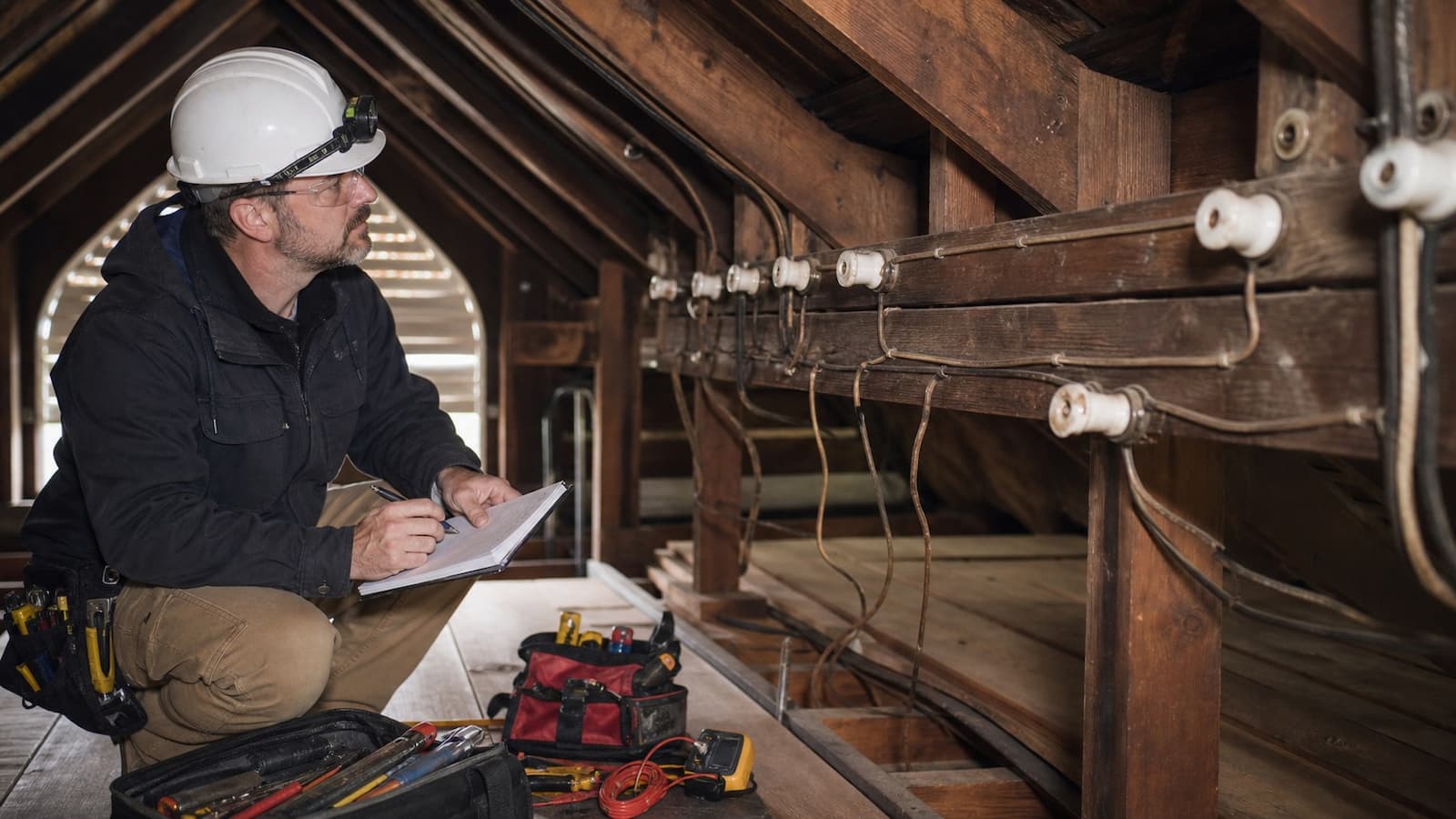
Old ceramic knobs and clipped cloth-covered wires often remain in attics after a partial rewire. Their presence does not prove that they carry electricity. The reverse is also true: a shiny breaker panel and three-prong outlets do not prove that every old branch circuit has been retired.
Active knob-and-tube
At least part of the old system remains energized and serves lights, receptacles, switches, or another load. Remediation may mean replacing all active branches in the project area, tracing mixed-era connections, correcting unsafe splices, and disconnecting the old conductors at their source. The exact scope depends on what the electrician finds and what the permitted project requires.
Inactive knob-and-tube
The old conductors have been taken out of service and cannot energize. Physical remnants may still be visible where removal would damage finished plaster or historic fabric. For rebate purposes, the crucial evidence is the licensed electrician’s certification—not the homeowner’s observation that a wire ends in midair.
Unknown status
This is the common starting point in an older San Francisco house. Several electrical eras may share the same attic, basement, and wall cavities. A proper knob-and-tube inspection should trace accessible circuits, test devices, examine the panel, and identify transitions between old and newer wiring. Visual identification alone cannot settle the question.
A Safer Order of Operations
- Contact EASE Home. Confirm eligibility, funding, timing, and the qualifying energy upgrade before signing an electrical contract.
- Schedule a licensed-electrician inspection. Ask for a written finding on whether knob-and-tube is active, inactive, or not fully traceable without additional access.
- Define the remediation scope. If active wiring remains, the proposal should identify areas and circuits rather than relying on a vague line such as “remove old wiring.”
- Resolve permits and inspections. Electrical rewiring in San Francisco commonly requires a permit and City inspection. Review our homeowner guide to San Francisco rewire permits.
- Coordinate the trades. Electrical work should be complete and documented before insulation covers accessible framing or conductors.
- Collect final documents. Obtain the itemized invoice, signed certification of inactivity, permit information, and final inspection record where applicable.
- Submit exactly what the program requests. Keep copies of the submission and any approval.
This order prevents a particularly expensive mistake: installing insulation and then learning that energized knob-and-tube remains beneath it. For the electrical and thermal-safety issues involved, see Can You Add Attic Insulation Over Knob-and-Tube Wiring?
What to Ask the Electrician to Put in Writing
A short invoice that says “electrical repairs” may not explain enough. Ask the contractor and EASE Home what the certification must contain. A clear project record usually identifies:
- The property address and inspection date.
- The electrician’s name, company, and California license information.
- Which accessible areas and electrical components were examined.
- Whether active knob-and-tube was found before the work.
- What circuits or areas were remediated.
- A direct statement that the relevant knob-and-tube wiring is inactive after completion.
- Permit and inspection details, if the work required them.
The electrician should never certify concealed conditions that could not reasonably be verified. If a wall cavity remains uncertain, the document should say so plainly. Honest limits make the report more credible and help the homeowner decide whether selective access is worth the disruption.
How Much of the Rewire Will $2,000 Cover?
That depends on the house. Replacing one accessible attic lighting run is very different from rewiring bedrooms across three finished floors. Plaster walls, difficult access, occupied rooms, service capacity, panel condition, permit scope, and patching all affect the price. The rebate may cover a meaningful portion of a small remediation, but it is unlikely to define the total budget for a complex whole-house project.
Use the incentive as one line in a complete budget. For local cost drivers and questions to ask when comparing proposals, read How Much Does It Cost to Replace Knob-and-Tube Wiring in San Francisco?
If the electrical proposal exceeds the incentive, ask whether the work can be divided into a safe, inspection-ready scope that still satisfies the energy project. Do not leave active branches in an area that will be insulated merely to hit a rebate ceiling. The correct scope comes from the conditions in the house, not the size of the incentive.
Common Reasons a Rebate File Gets Messy
Work begins before program confirmation
Limited-time programs may have enrollment dates, funding limits, or documentation rules that are not obvious from a news article. Get the current answer first.
The invoice is not itemized
A combined renovation invoice can make it hard to see what was spent on inspection, remediation, permits, or unrelated electrical upgrades. Ask for separate line items.
Visible remnants are mistaken for active wiring
A contractor may photograph old porcelain hardware without proving its electrical status. The program asks for certification of inactivity, which requires an electrical conclusion rather than an architectural observation.
The energy project and electrical project are planned separately
The insulation crew needs to know where old wiring was found. The electrician needs to know which cavities will be insulated and which new appliance loads are coming. The EASE Home team needs documentation that connects the work. A short coordination call can prevent return visits and contradictory paperwork.
Questions to Ask Before You Sign
- Am I enrolled in EASE Home, and is the 2026 knob-and-tube incentive still available?
- Does my planned insulation, duct, or induction project satisfy the program’s required scope?
- Must the inspection or remediation be approved before work begins?
- Does the electrician’s proposal distinguish testing, remediation, permitting, and restoration?
- Who will produce the final certification of inactivity?
- What happens if testing reveals active wiring outside the original work area?
- Will the insulation crew wait for electrical clearance before covering the area?
Frequently Asked Questions
Is the BayREN knob-and-tube rebate available to every Bay Area homeowner?
No. BayREN presents it as a limited-time incentive connected to the EASE Home program. Household, location, project, documentation, and funding requirements may apply. Confirm eligibility directly with EASE Home.
Can I receive $300 simply because old knobs and tubes are visible?
The published requirement is certification from a licensed electrician that the knob-and-tube wiring is inactive, along with the electrician’s invoice. Visible remnants alone do not establish electrical status.
Does the $2,000 incentive pay for a complete rewire?
It may offset part of the cost, but whole-house replacement in a finished San Francisco home often involves a much larger scope. Get a property-specific proposal.
Should I remove every porcelain knob after the wiring is disconnected?
Not necessarily. The safety and documentation priority is to make old conductors inactive and prevent accidental re-energization. Physical removal may be impractical inside finished walls. Ask the electrician how abandoned wiring will be terminated and documented.
Can insulation be installed as soon as the electrician leaves?
Only after the electrical scope, required inspections, and program documentation are complete. Confirm the handoff with both the electrician and the EASE Home contractor before covering cavities.
Before You Count on the Rebate
The 2026 BayREN incentive can make a stalled efficiency project easier to finish, particularly when a licensed electrician can document that old wiring is already inactive or can remediate a limited active scope. Its value depends on planning. Verify EASE Home eligibility, inspect before insulating, document the electrical work carefully, and keep the energy and electrical contractors working from the same scope.