
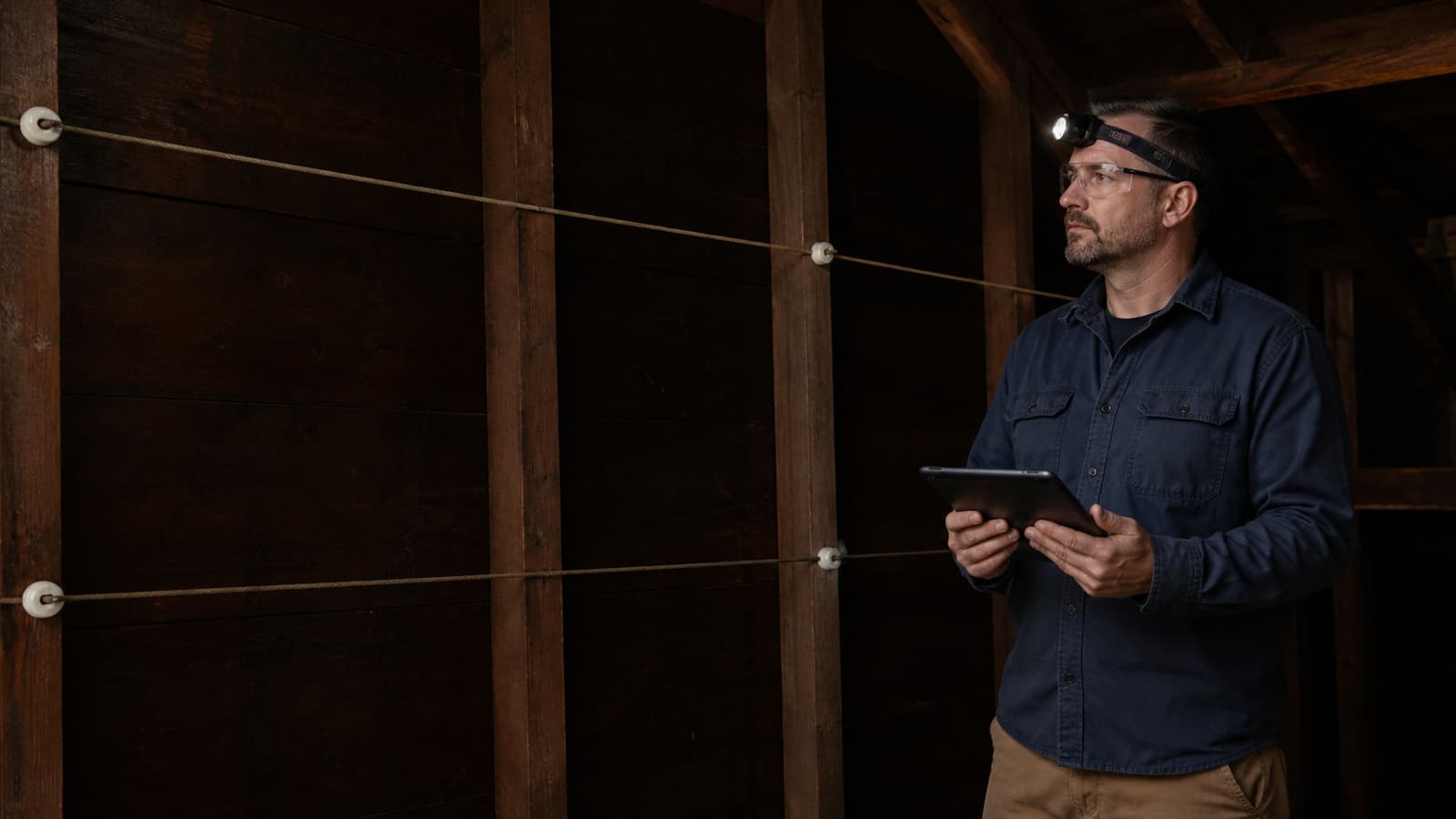
Presence · activity · condition · limitations
Knob-and-Tube Wiring Inspection in San Francisco
Inspect accessible attic, basement, and crawlspace wiring; trace representative circuits; review the panel and devices; and leave with a documented next step rather than a yes-or-no guess.
Four separate findings
Seeing porcelain hardware answers only one question
Old knobs and tubes can remain after a rewire. New cable can appear near a panel while legacy branches remain active upstairs. A three-prong receptacle can be grounded, GFCI-protected under an allowed method, or simply installed without a grounding path.
A useful inspection keeps four findings separate: whether legacy material is present, whether it appears active, what condition is observable, and what remains concealed or unverified.
Present?
Porcelain supports, cloth conductors, old splices, or abandoned remnants.
Active?
Representative tracing and testing tied to actual lights, receptacles, or loads.
Condition?
Accessible insulation, support, splices, heat, moisture, pests, alterations, and insulation contact.
Limits?
Finished cavities, inaccessible areas, unsafe access, and circuits not included in the agreed tests.
Three inspection zones
What each area can reveal
Attic
Ceiling-light branches, conductor support, splices, heat damage, extensions, roof leaks, and insulation near active legacy wiring. Safe access and clearance determine how much can be seen.
Basement or garage
Service and panel context, vertical feeds, first-floor branches, junctions, grounding and bonding components, and evidence of partial remodels or later additions.
Crawlspace
Underfloor routes, receptacle drops, moisture or pest exposure, cable transitions, inaccessible bays, and support conditions. Entry depends on clearance and environmental safety.
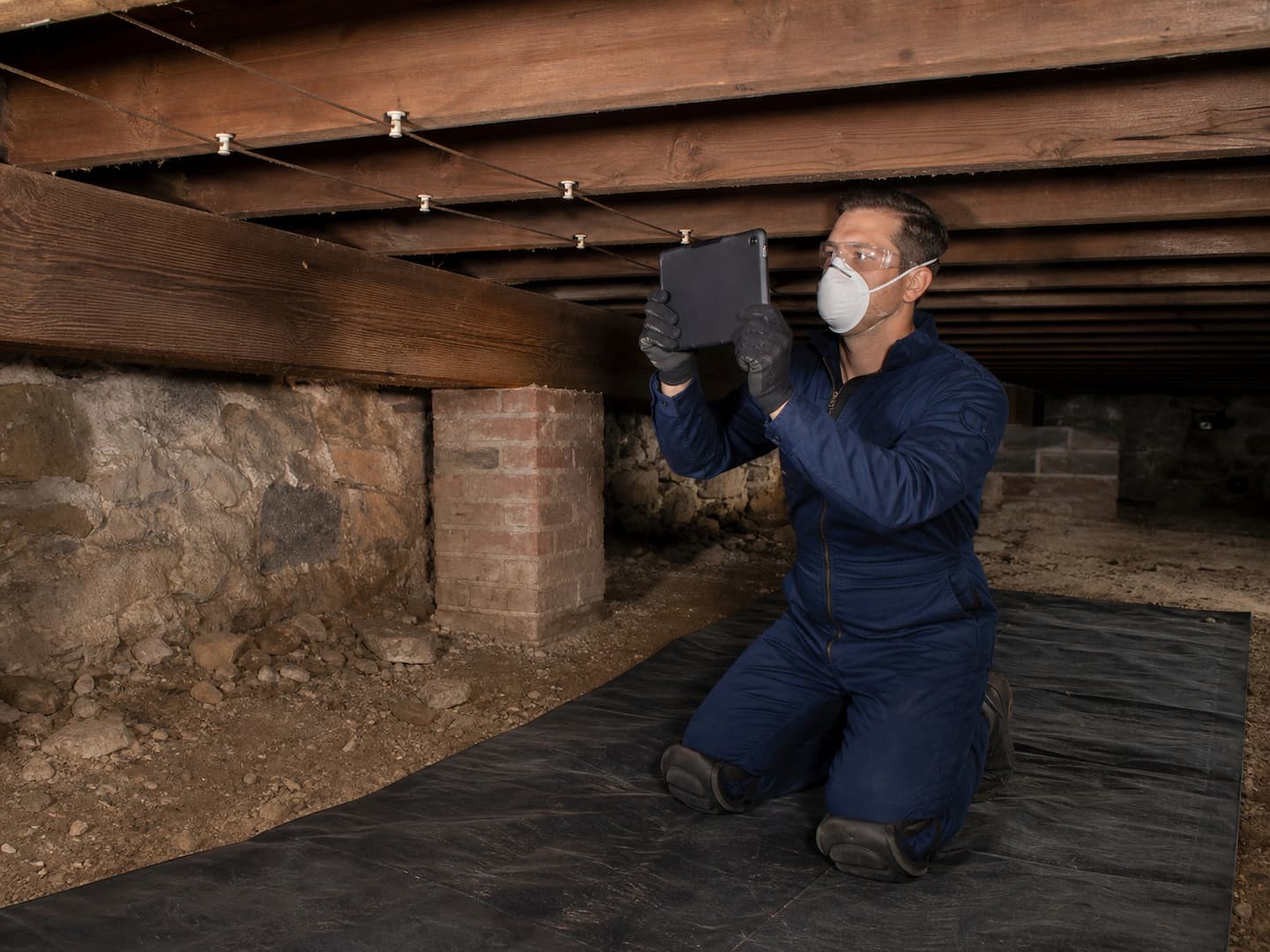
Testing without overclaiming
A noninvasive inspection builds a probability map, not X-ray vision
We combine accessible observations with representative electrical tests and circuit behavior. This can often show which rooms or devices still depend on old branches and where newer wiring begins.
It cannot expose every hidden splice or prove the condition of every conductor inside closed walls. When a decision requires stronger confirmation, the report may recommend broader tracing, targeted access, review of permits and invoices, or inspection during planned renovation.
The visit
Inspection workflow
Intake
Clarify whether the inspection supports safety planning, insulation, insurance, a sale, or a remodel.
Accessible-area survey
Review service equipment, panels, attics, basements, crawlspaces, and representative devices within scope.
Representative tracing and tests
Connect visible wiring to actual circuits and device behavior using methods appropriate to the system.
Findings and next step
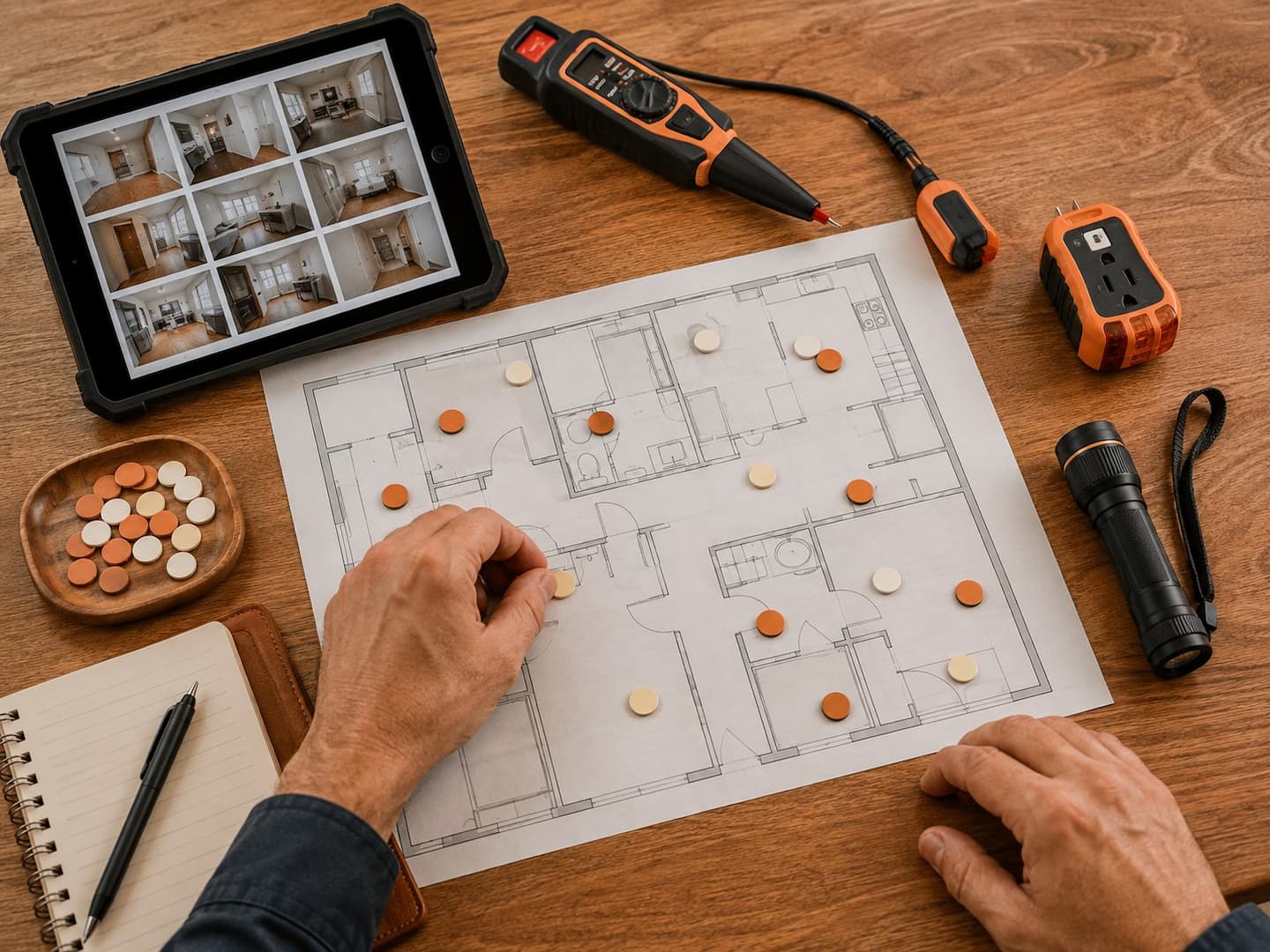
Organize photos, locations, confirmed facts, concerns, limits, and repair or replacement priorities.
Your inspection record
What a documented scope can include
- Accessible-area and panel overview
- Locations where legacy material was observed
- Representative circuits that appear active
- Photo-backed condition notes
- Immediate safety concerns, if any
- Limitations and recommended further investigation
- Repair, phased replacement, or full replacement path
Choose the next document
Inspection, insurance report, or transaction clearance?
Inspection FAQ
Questions about access and certainty
Does the inspection include opening walls?
The standard scope is noninvasive unless targeted access is approved separately. We use accessible areas, representative devices, panel observations, and electrical testing, then state what remains concealed.
Can you prove all knob-and-tube is inactive?
That conclusion depends on access, circuit complexity, testing scope, and records. We can define what was verified and how. Some properties require broader tracing or targeted access before a stronger statement is supportable.
Can you inspect a crawlspace that is very tight or damp?
Only when access is physically and environmentally safe. Low clearance, standing water, pests, damaged entry, suspected contamination, or other hazards can limit entry. Those limits are recorded.
Should attic insulation be installed before the wiring inspection?
No. Determine whether active legacy wiring is present and resolve the electrical plan before insulation covers the area or changes thermal conditions around conductors.
Will you quote replacement after the inspection?
Yes, when the findings support a practical scope. The proposal can distinguish immediate corrections, phased replacement, full active-system replacement, panel work, and finish restoration assumptions. See what belongs in a comparable San Francisco replacement estimate.
Need to know what is still active?
Start in the accessible spaces and follow the circuits
Tell us what prompted the inspection and which deadlines or renovation plans affect the decision.