
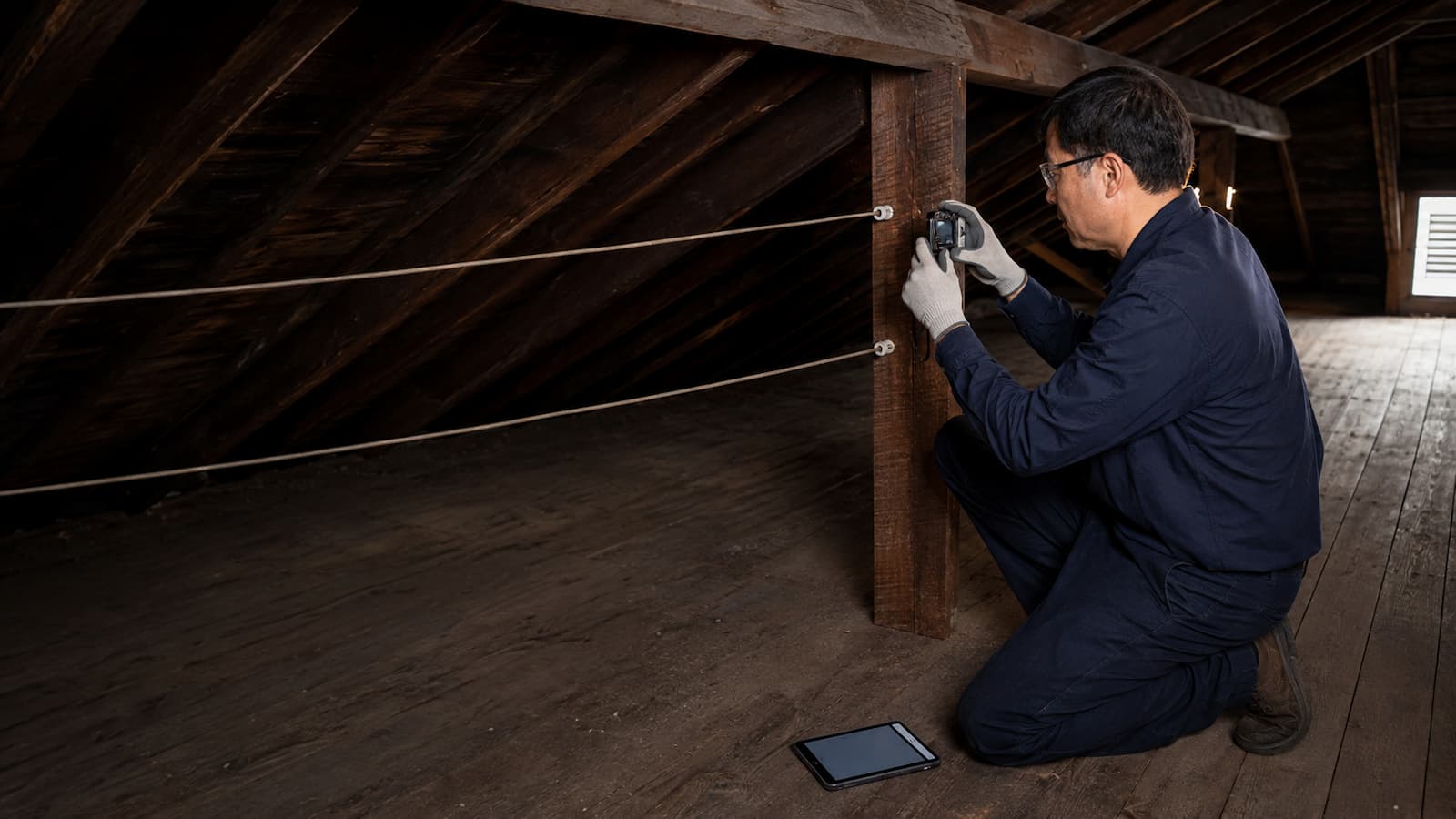
Photo-backed findings for underwriting review
Insurance Electrical Report for a Knob-and-Tube Home
Give the carrier a clear record of what was observed, what was tested, what remains uncertain, and what corrective work is recommended—without promising an underwriting result.
Send the request before the visit
The best report starts with the carrier’s actual question
“Provide an electrical inspection” can mean several things. One underwriter may want confirmation that no active knob-and-tube remains. Another may ask for panel photos, wiring type, amperage, repair receipts, permit status, or a signed statement on a carrier form.
Forward the email, notice, checklist, or form before scheduling. That lets us build the visit around the decision the insurer needs to make. It also reduces the risk of paying for a general inspection that does not answer the carrier’s request.
Important: an electrical report supplies evidence. It does not compel a carrier to issue, renew, or price a policy. Underwriting rules differ and can change.
A report a reviewer can scan
What the package can include
Property and request context
Address, inspection date, areas accessed, reason for the report, documents supplied by the owner, and the carrier’s stated questions.
Service and panel snapshot
Visible service and panel conditions, main rating where it can be verified, overcurrent devices, labeling, and observable grounding and bonding details.
Legacy wiring observations
Accessible knob-and-tube locations, visible condition, evidence of alterations, open splices, insulation contact, or other conditions within the scope.
Representative testing
Tests appropriate to the agreed scope, such as circuit tracing or device checks, together with a plain statement of what the results do and do not establish.
Photo index
Captioned images tied to locations and findings, not a folder of unexplained close-ups.
Priority and next steps
Observed safety concerns, recommended corrections, further access or testing if needed, and a remediation path that can be quoted separately.
Evidence has boundaries
What an accessible inspection cannot honestly certify
Finished walls and ceilings hide most branch-circuit pathways. A visible modern cable at one receptacle does not prove the entire circuit was replaced. An abandoned porcelain knob does not prove a conductor is still energized.
The report identifies the inspection method, accessible areas, representative tests, and limitations. If the carrier requires confirmation beyond what noninvasive work can establish, the next step may involve targeted access, broader tracing, repair records, or permitted replacement.
- No guarantee of concealed conditions
- No guarantee of insurance acceptance
- No claim that a device is grounded based on appearance alone
- No “code clearance” for work outside the agreed scope
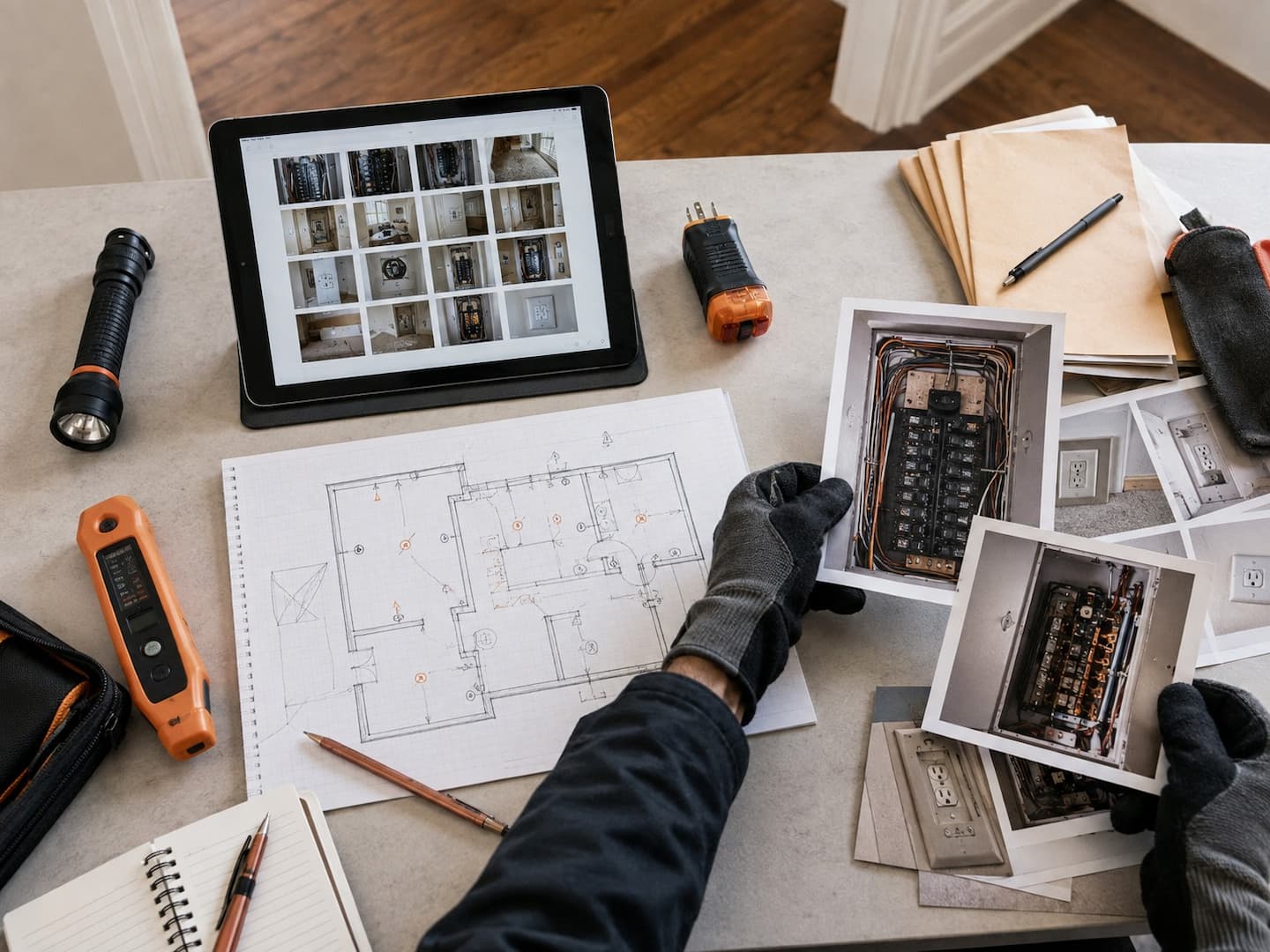
Before, during, after
How the underwriting inspection works
Request review
We read the carrier’s notice or form, confirm the deadline, and identify any exact wording or attachments requested.
Access plan
You confirm safe access to the electrical panel, attic, basement, crawlspace, representative devices, and any area named by the carrier.
On-site inspection and documentation
An electrician records observable conditions, performs agreed tests, and captures location-specific photos.
Report preparation
Findings are organized for a non-electrician reviewer. Confirmed facts, concerns, limitations, and recommendations are kept distinct.
Response path
If the carrier asks a follow-up question or requires corrections, we can clarify the report and prepare a separate repair or replacement scope.
Bring the right inputs
Owner checklist
- The insurer’s email, letter, form, or exact verbal request
- Policy or transaction deadline and agent contact
- Relevant home-inspection pages
- Electrical invoices, permits, and final inspection records
- Known remodel history and panel changes
- Clear access to the panel and unfinished spaces
Related decision paths
When the report points to more work
Underwriting report FAQ
Questions to settle before the deadline
Will the report guarantee approval or renewal?
No. The insurer alone decides whether to write or renew a policy. The report can replace assumptions with organized observations, tests, photos, and recommendations.
Can you use the insurance company’s form?
Usually we can review a carrier form before scheduling and tell you whether its requested statements fit the available inspection scope. Send it in advance; do not wait until after the site visit.
Do you need to open walls?
A standard visit focuses on accessible and representative areas. If the carrier requires proof about concealed wiring that those methods cannot establish, targeted access or additional investigation may be necessary and should be approved separately.
What happens if unsafe conditions are found?
The report identifies the observation and recommended priority. Conditions presenting an immediate hazard may require de-energization or prompt correction. Repair pricing is kept separate so the findings remain clear.
How long will the report remain acceptable?
Ask the carrier. Acceptance windows differ, and a report describes conditions at the time of inspection. Renovation, repairs, damage, or later alterations can change the picture.
Have an insurance notice in hand?
Send the exact request before booking
We will help you determine whether you need an underwriting report, a broader knob-and-tube inspection, or documentation after corrective work.