
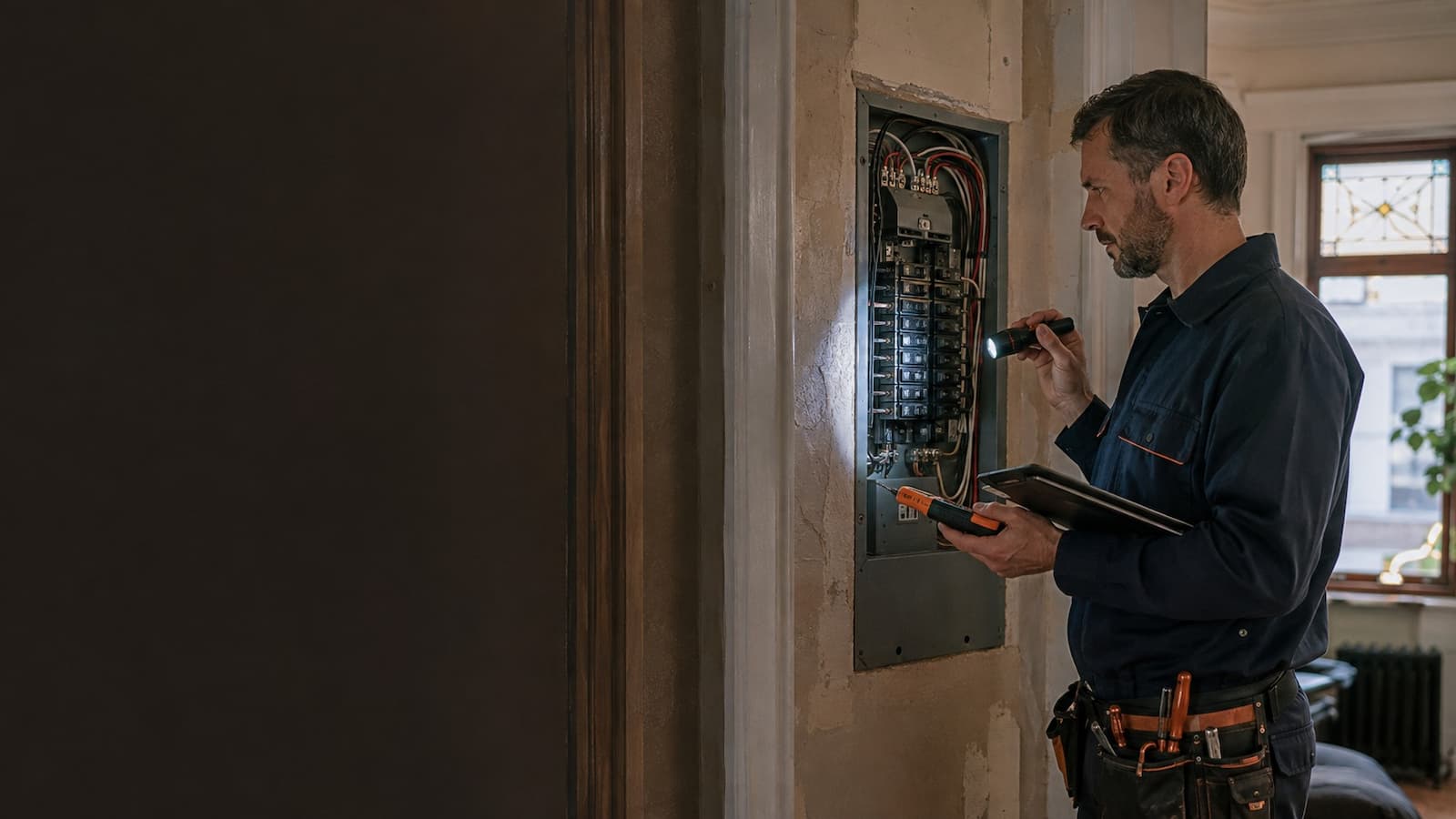
Private electrical review · practical correction plan
Code Compliance Inspection Package in San Francisco
Understand observable electrical deficiencies, project-triggered requirements, safety priorities, and the next permit or repair step before a remodel, sale, insurance response, or city inspection.
Define the question first
“Bring it up to code” can mean four different jobs
An older installation is not automatically required to be rebuilt simply because today’s code is different. New work, altered work, unsafe conditions, and a private insurance or transaction requirement are separate issues.
Our review starts with the decision you need to make. Are you preparing for permitted construction, responding to an inspection notice, evaluating a purchase, documenting an existing system, or prioritizing safety work? The answer changes the scope and the usefulness of the report.
This is a private electrical assessment, not an official City inspection or certificate. San Francisco’s Department of Building Inspection decides permit compliance and inspection approval for work under its authority.
Choose the review depth
Package options
One issue or project
Review a panel concern, remodel area, correction notice, grounding question, legacy-wiring condition, or safety-device requirement.
System condition and priorities
Survey accessible service equipment, panels, wiring methods, representative devices, grounding and bonding, protection, and life-safety interfaces.
Workmanship readiness
Review an agreed completed or in-progress scope for observable issues before the relevant official inspection, without representing the City’s decision.
A report built for action
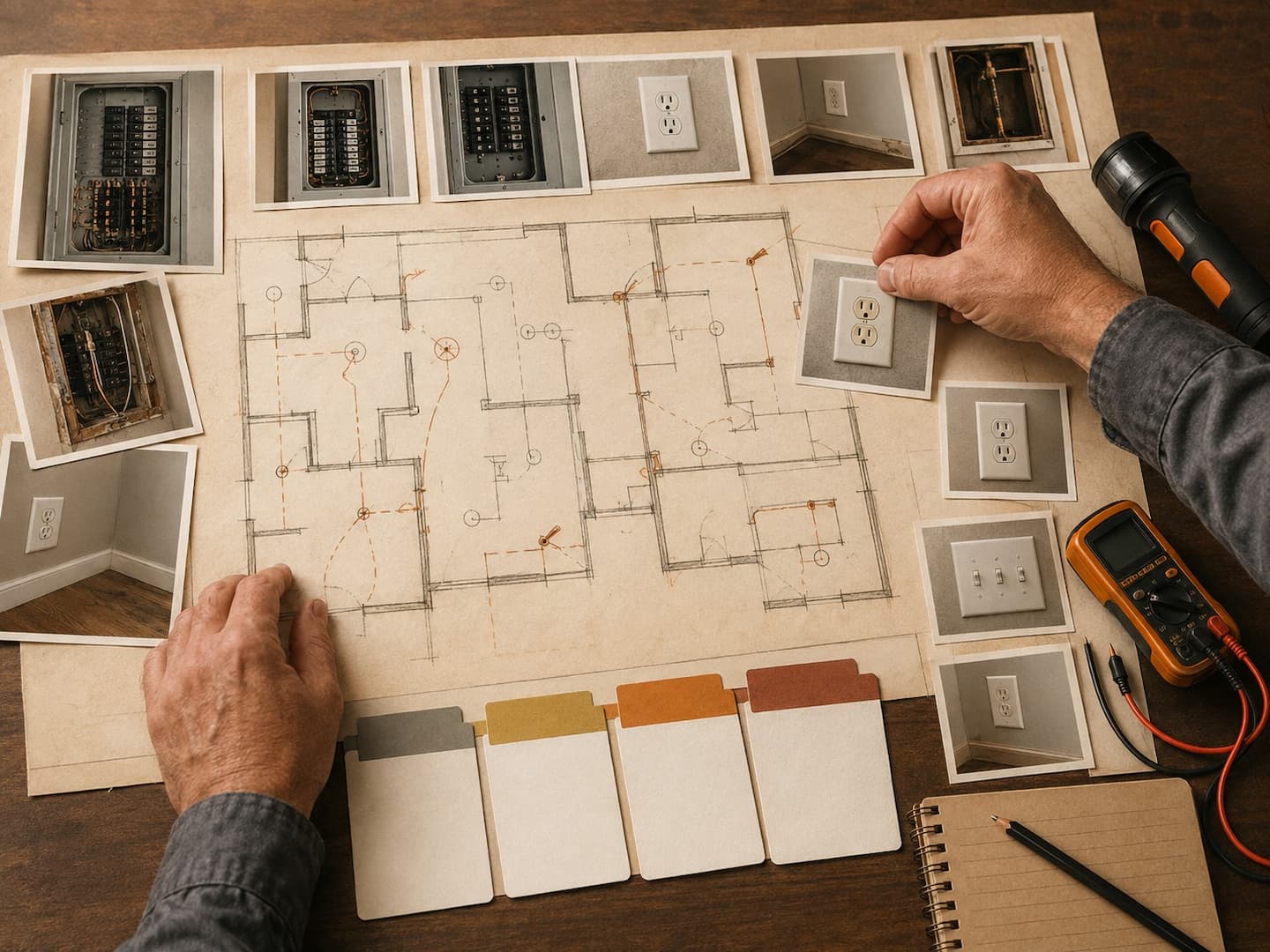
What you receive
- Scope, access, methods, and limitations
- Photo-backed observable findings
- Separation of immediate hazards from planned improvements
- Notes on work that may be permit- or project-dependent
- Recommended testing, access, or specialist follow-up
- A correction roadmap that can be priced separately
Areas commonly reviewed
From service equipment to the last device in scope
Service and panels
Condition, accessibility, openings, breaker compatibility, directories, obvious overheating, and capacity context.
Wiring methods
Accessible knob-and-tube, aluminum branches, cable support and protection, junctions, alterations, and mixed systems.
Protection
Representative GFCI/AFCI conditions, overcurrent protection, grounding, bonding, and surge-protection dependencies.
Devices and alarms
Representative receptacles, switches, fixtures, wet-location issues, and smoke/CO alarm observations within scope.
Build the correction cluster
Common follow-on scopes
Prepare the evidence
Records make a limited visual review more useful
Before the visit, gather the correction notice, permit number, renovation drawings, prior electrical reports, panel schedules, insurance request, and any invoices that describe concealed work. Mark intermittent symptoms and the conditions that trigger them. These records do not replace field observations, but they help connect what is visible today with the work that was intended.
Access matters too. Clear the service equipment, representative receptacles, attic hatch, crawlspace entry, and other areas named in the scope. If a tenant, seller, agent, or contractor must attend, decide who can authorize testing or targeted access before the appointment. The final report can then state what was inspected, what remained inaccessible, and which unanswered questions require records, testing, or an official inspection.
Compliance review FAQ
What the package can and cannot do
Will this guarantee that a City inspection passes?
No. It can identify observable concerns and improve readiness, but only the assigned authority can approve permitted work.
Does every old condition violate current code?
No. Existing, altered, repaired, and new work can be treated differently. Unsafe conditions and specific project triggers still matter. The report should state the context rather than applying current new-construction rules indiscriminately.
Can concealed wiring be declared compliant?
Not from a noninvasive visual review. We document accessible evidence and limitations. Testing, records, targeted access, or inspection of work before cover may be needed for a stronger conclusion.
Can you perform corrections after the inspection?
Yes, a separate proposal can address prioritized findings. Keeping diagnosis and repair pricing distinct makes the scope easier to understand.
Need a usable correction plan?
Tell us what decision or inspection you are preparing for
We will match the review depth to the project and state clearly where private findings end and City approval begins.
Official references
Use DBI’s code and inspection resources and the City’s electrical inspection guidance for official requirements. Code editions, local amendments, project scope, and the assigned authority affect the final determination.